
Lapping Scope Rings: A Precision Shooter’s Guide to Perfect Alignment

Updated: 1 day ago
Quick answer: lapping scope rings means cutting the inside of the rings with an abrasive bar until they match the scope tube instead of pinching it in two narrow bands. We lap to 90 percent contact. The hard stop is the ring halves still closing on the tube with an even gap. Past that point the rings are larger than the tube, they have stopped gripping, and the fix is bedding rather than more lapping.
A scope does not care what the rings cost. It cares how much of it is being held and where. Two hard edges in the wrong places will bend a tube that a full-contact ring would carry for a lifetime without complaint.
One thing before any of this. Lapping is the second half of mounting a scope. The first half is the base underneath, and if the base is not flat on the receiver, nothing you do to the rings will save the job. The full disclaimer is at the bottom of this page.

What Lapping Actually Does to a Set of Rings
Lapping scope rings is about more than just achieving a secure fit it’s about enhancing accuracy, protecting your optics, and ensuring that your setup holds zero under all conditions.
Precision and Contact Area: When you lap scope rings, you increase the surface contact between the scope tube and the rings. More contact means less chance of the scope moving under recoil. Even minor scope slippage can throw off your zero, especially in long-range shooting. By creating a custom fit for your scope tube, you achieve a level of consistency that factory rings alone can’t guarantee.
Ring Misalignment: Misalignment can occur due to slight imperfections in the mounting surfaces or even variances in the manufacturing of the rings themselves. High-quality rings help, but even the best can have minor discrepancies. Lapping corrects these issues by removing small amounts of material, bringing the rings into alignment with each other and ensuring that your scope sits perfectly centered without undue stress.
Reduced Scope Stress and Protection Against Damage: Misaligned rings create stress points on the scope tube, which can lead to warping or even internal damage over time. By lapping your rings, you minimize these stress points, protecting both the scope’s structural integrity and its optical precision. This is particularly important with high-end optics, where any distortion can affect your aim.
Improved Accuracy and Zero Retention: With a more secure fit and better alignment, your scope will hold zero more consistently, even after multiple rounds or during transport. This is especially valuable for precision shooters who rely on pinpoint accuracy at long distances.

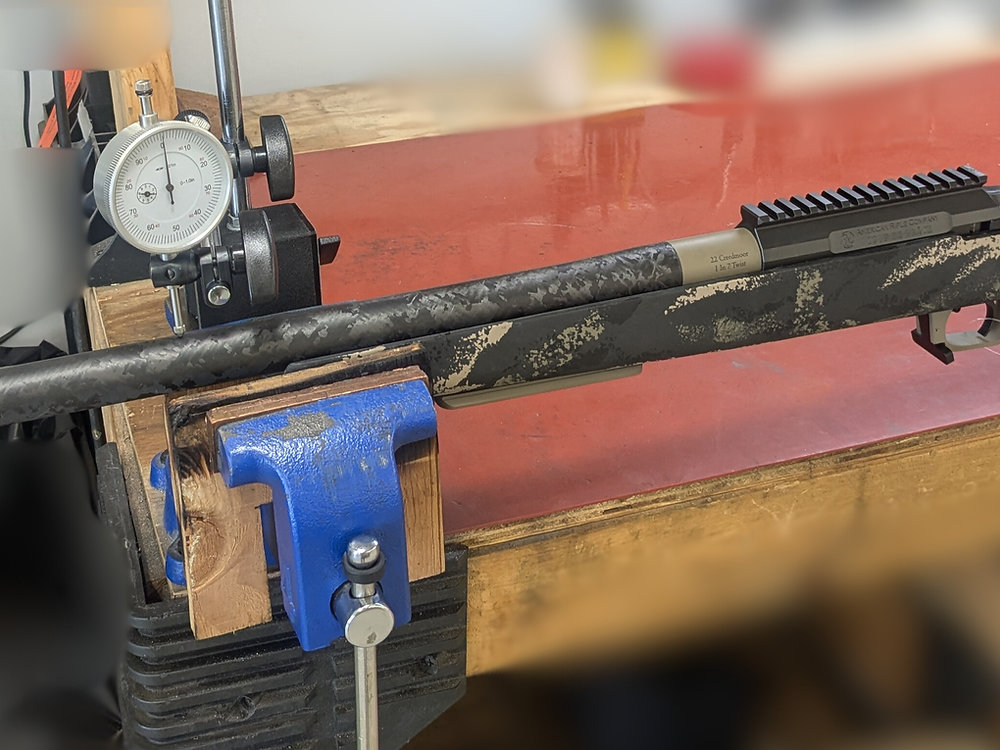
Before You Lap Anything, Measure the Base
Put a dial indicator on the base. Tighten the front screws, then loosen and tighten each rear screw while you watch the needle, and swap ends and do it again. On a good rifle you will see a couple of thousandths. We have measured more than thirty thousandths of lift at the front of a base on a rifle that looked perfectly normal from the outside.
That reading decides which job you are doing. Under five ten-thousandths of an inch, true the base and lap the rings, which is everything below. Over five ten-thousandths, lapping cannot correct it, because you would be opening a hole that is already larger than the tube. That base gets bedded first, and the rings get lapped afterward.
Skipping this step is how a careful lapping job ends up as a precise mount on a crooked foundation.

What You Need
Before you begin, gather the right tools for the job. This isn’t a task where makeshift solutions will work; you need precision tools to achieve professional results.
Lapping Bar and Compound: Brownells and MidwayUSA sell lapping kits, which includes a quality lapping bar and the appropriate lapping compound. A good lapping bar will be true to diameter, ensuring an even lap across the entire ring surface. The compound’s grit should be fine enough to remove material evenly without causing gouges. Some where around 220 grit works well.
Torque Wrench: A torque wrench is essential for consistent, controlled pressure on the ring screws. Uneven torque can cause misalignment and negate the benefits of lapping.

Protective Materials: Cover your rifle action with painter’s tape or a cloth to prevent any lapping compound from contaminating the action, which can impact function and wear.

Degreasing Solution: Degreasing the rings prior and after lapping this removes oils and residue, allowing the compound to work more effectively.
Rosin or Bedding Compound: Powdered rosin provides extra holding powder and helps prevent slipping. Bedding compound can be used for ultra holding power. Our scope bedding guide covers that job in full.

For this process, I recommend the Wheeler Lapping Kit, which includes a high-quality lapping bar and lapping compound that will deliver consistent results. Brownells and Midway USA have tools that are precision-machined and trusted by professionals, making them ideal for achieving the alignment and contact area that serious shooters demand.

How We Lap a Set of Rings, Step by Step
Clean, Degrease and Cover the Action
Begin by cleaning and degreasing the rings. Any oil or residue can interfere with the lapping process, so take the time to prepare properly.
Cover the rifle action with painter’s tape and/or a cloth. Lapping compound is abrasive, and if it gets into the action, it can cause wear and functional issues. A clean work environment is critical.
Mount the Lower Halves and Push Them Forward
Attach the lower halves of the rings to your rifle’s base. Ensure they are torqued to the manufacturer's specifications. Even torque is key to preventing additional misalignment.
If mounted to a picatinny rail push the rings forward in the slot towards the muzzle of the base.
Check that the rings are level and aligned with each other. Misalignment at this stage will result in uneven lapping, so double-check your work before moving on. Example: Ruger rings you need different heights of rings. Med in the front high in the rear.
Apply the Compound Thinly
Apply a thin, even layer of lapping compound to the inside surfaces of the lower ring halves. Too much compound can create a mess and lead to uneven material removal, so start with a conservative amount.

Set the Bar So It Still Moves
Verify you have the correct diameter lapping bar for the rings you have.
Place the lapping bar in the rings, making sure it sits evenly. Tighten the top halves of the rings loosely just enough so the bar can move freely while still making contact with the compound.

Lap With Steady Pressure, Not Speed
Hold the lapping bar firmly, and slide it back and forth in a controlled, even motion. Rotate the bar slightly with each pass to achieve a uniform lap.
Be patient apply steady, even pressure. Rushing this process can lead to uneven lapping or over-lapping, which will enlarge the rings excessively.
Check Often, and Know Exactly Where to Stop
After about 20-35 passes, remove the bar and clean the rings to check your progress. Look for a uniform, shiny area where the material has been removed. Steel rings will grind slower than aluminum rings.
Aim for 90 percent contact on each ring. This provides excellent support without over-lapping. Too much lapping can make the rings too large to hold the scope securely, so it’s critical to stop once you reach the desired contact.
The hard stop is not a percentage, it is a fit. The ring halves have to still close on the tube with an even gap on both sides. The moment the halves meet each other before they clamp the scope, the ring is larger than the tube, it has lost its grip, and more lapping makes it worse. That is where bedding takes over.

Clean Everything, Then Assemble
Once you’re satisfied with the contact area, thoroughly clean off all compound residue from the rings, base, and lapping bar.
Applying rosin to the rings can be done now. Also can begin bedding scope at this time also.

Reassemble the rings and mount your scope, ensuring that each screw is torqued evenly to prevent introducing new alignment issues. Blue thread locker can be used on threads of screws at this point.
Where This Goes Wrong
Overlapping: One of the most common mistakes is removing too much material. Excessive lapping enlarges the rings, reducing their ability to grip the scope securely. Stop at 90 percent contact, or sooner if the ring halves start closing on each other.
Contamination of Action: Lapping compound is abrasive, and if it gets into the action, it can cause wear and functional issues. Cover the action thoroughly before starting.
Uneven Pressure During Lapping: Applying uneven pressure can result in an uneven lap. Focus on steady, consistent movements, and avoid “forcing” the bar.

What a Properly Lapped Ring Buys You
Enhanced Scope Lifespan: By reducing stress on the scope tube, lapping minimizes the risk of damage to both the scope’s body and internals, extending its life.
Consistency in Zero: A properly lapped scope is less likely to shift under recoil, making it more reliable across different shooting sessions.
Reduced Risk of Slippage: Especially with high-recoil rifles, properly lapped rings create a secure fit that minimizes scope movement, even under heavy recoil.
When Lapping Is Not the Answer
Three situations, and none of them are solved by more passes with the bar. The base measured over five ten-thousandths, so the error is underneath the rings and not in them. The rings have already been opened past the tube and the halves close on each other. Or the rings are cheap enough that the tolerances were never held, and you would be cutting away more material than the ring can spare.
All three point to the same place, which is bedding. And the last one is worth saying out loud, because it runs against what most people expect. Cheap rings cost more labor, not less. The tolerances are not held, so the indicator finds more error, the lapping takes longer, and the job climbs a level. The customer who saved three hundred and fifty dollars on rings often pays it back at the bench.
A Five-Minute Check You Can Do Tonight
Unload the rifle and check it twice. Then look at the gaps between the ring halves, front and rear, both sides. They should be even. A ring pinched down harder on one side than the other is either sitting on a base that is out of line or was tightened out of sequence.
Then take the top halves off and look at the tube where the rings were sitting. Two bright bands with dull metal between them means the rings are holding the scope in two narrow places. That is what lapping fixes.
Neither check tells you to reach for a lapping bar. What they tell you is whether the mount is worth a proper look before you start blaming the barrel or the ammunition.

What This Costs at Redleg
Mounting a scope and lapping the rings to contact is $200. If the indicator says the base needs bedding as well, that job is $375. Bedding the base and the rings together is $550. Those are labor only. Rings and bases are quoted separately, because the hardware runs from a forty dollar set to a four hundred dollar one-piece mount.
Frequently Asked Questions
What does lapping scope rings actually do?
It cuts the inside of the rings with an abrasive bar until their curve matches the scope tube. Out of the box, most rings touch the tube in two narrow bands. Lapping turns those bands into broad, even contact, so the ring holds the scope instead of pinching it.
Do scope rings really need to be lapped?
Not every set. A good one-piece mount on a straight base can go on as it is. Cheap rings, mixed rings, and anything on a factory two-piece base usually need it, and the only way to know is to lap a little and read where the marks are.
How much contact should a lapped ring have?
We lap to 90 percent contact. The hard stop is that the ring halves must still close on the tube with an even gap. If they touch each other before they clamp the scope, the ring is now bigger than the tube and no more lapping will help.
Can you lap scope rings too much?
Yes, and it is the most common way this job gets ruined. Every pass makes the hole bigger. Once the ring is larger than the tube it has lost its grip, and the repair is bedding the ring, not lapping it further.
What grit lapping compound should I use?
Around 220 grit. Fine enough to cut evenly without gouging, coarse enough to get there in a reasonable number of passes. Finer compound polishes more than it cuts and makes a long job longer.
How many passes does lapping take?
Check after about 20 to 35 passes, then keep checking. There is no fixed number. Steel rings cut much slower than aluminum, and the point of stopping is a measurement, not a count.
Do steel rings lap differently from aluminum?
Steel takes noticeably longer and gives you more warning before you overshoot. Aluminum cuts fast, which is exactly why people over-lap aluminum rings. Check more often, not harder.
Should I bother lapping expensive rings?
Often less, sometimes not at all. Premium rings are held to tighter tolerances so there is less to remove. That is different from saying they are perfect. Lap a little, read the marks, and stop early if the contact is already there.
Should I lap the rings or bed the scope?
Lap first. Bedding is what you do when lapping has run out of room, when the rings are low quality, or when the rifle recoils hard enough that contact area matters more than convenience.
Do I check the base before I lap the rings?
Always. Put a dial indicator on the base first. Under five ten-thousandths of an inch, true it and lap the rings. Over that, lapping cannot fix what is wrong, because you would be opening a hole that is already larger than the tube. That base gets bedded.
Do I need to lap a one-piece scope mount?
Usually far less, because both rings were machined in one setup on one piece of metal, so they start out closer to each other than two separate rings ever will. Check it anyway. One-piece does not mean in line with the receiver underneath it.
What torque do I use on the ring screws while lapping?
Snug the lower halves to the base at the base maker's number before you start, because uneven torque at that stage builds misalignment into everything after it. The top halves stay loose enough during lapping that the bar still moves.
Is rosin necessary after lapping?
No, but powdered rosin adds holding power on a hard-recoiling rifle without any permanent modification. Bedding compound gives more hold and is permanent. Rosin is the reversible option.
Does lapping void a warranty?
It is a modification to the rings, so ask the ring maker if that matters to you. It does not touch the scope, which is the part with the warranty worth protecting, and reducing the stress on that tube is the reason the job exists.
What does ring lapping cost at Redleg?
Mounting a scope and lapping the rings to contact is $200. If the base needs bedding as well, that job is $375. Bedding the base and the rings together is $550. Labor only, with rings and bases quoted separately.
Can I lap scope rings myself?
Yes, with a true lapping bar of the right diameter, compound, a torque driver, and the discipline to keep checking. The failure mode is not difficulty, it is going ten passes too far.
Bring Us the Rifle, or Bring Us the Question
If your rifle used to shoot and now it does not, the mount is the cheapest thing to rule out and the most common thing we find. Our accuracy diagnostic is $150. We shoot it, measure it, and hand you a graded report with the price of every option before you decide anything.
Call Redleg Company at 507-677-6007, or bring it in. 430 Main Avenue, Chandler, Minnesota. Monday to Friday, 9 to 5. Full service list and current pricing at www.redlegguns.com/services-offered.

Take Your Reloading to the Next Level
Ready to improve your brass prep, shrink your groups, and make your precision rifle shoot like a laser? Download the Redleg Reloading Sheets and start keeping records that tell you something.

Disclaimer
The information provided in this blog post is intended for educational and informational purposes only and is aimed at experienced gunsmiths. Scope bedding and lapping are advanced techniques that, if done incorrectly, can cause damage to the firearm, scope, or scope rings, and may even result in personal injury. Attempting these procedures without proper training or experience can compromise the safety, accuracy, and integrity of your firearm.
Redleg Company assumes no responsibility or liability for any damages, injuries, or legal consequences that may arise from the use or misuse of this information. Always follow the manufacturer’s guidelines for your specific scope, rings, and firearm, and consult a qualified professional if you are unsure about any part of the process. By following this guide, you acknowledge that you are solely responsible for your own safety and the results of your work.


Comments