
The Art of Hand Lapping a Rifle Barrel: Precision Through Attention to Detail

Updated: 22 minutes ago
Quick answer: hand lapping works a lead lap, cast inside your own bore, back and forth with an abrasive compound to cut out tight spots and rough tool marks. It refines a good barrel. It does not rescue a bad one, and most rifles that get lapped never needed it. Slug the bore and look at it with a borescope first. If you cannot say where the tight spot is and how big it is, you are not ready to remove steel.
What we see in the shop is barrels lapped to chase flyers, poor grouping and inconsistent velocity, when the real problem was neck tension, bedding, bullet choice or the mount. Lapping gets blamed and credited for things it never did, and there is no undo button on a bore.

What Hand Lapping a Rifle Barrel Is, and What It Fixes
Hand lapping is a precision process where a lead lap coated with abrasive compound is worked through the bore of the barrel. The goal is to:
Smooth Out High Spots:Even out tight and rough sections of the bore for consistent bullet engagement.
Address Throat Erosion:Remove sharp, uneven edges in the throat caused by wear, which can look like "alligator skin" under a borescope.
Reduce Barrel Vibrations:Minimize inconsistencies in the bore that disrupt harmonics during firing.
Ensure Even Dimensions:Create a uniform bore diameter from chamber to crown, verified by measuring with NECO slugs.
The result is a barrel with an even, polished bore not mirror-like, but with faint parallel marks that indicate proper rifling and reduced friction. When done correctly, lapping enhances accuracy and barrel performance, but it requires precision, patience, and a clear understanding of the bore’s original condition.
What Is Actually Happening Inside the Bore
Hand lapping is not polishing.
It iscontrolled material removalinside the bore.
eliminate tight spots
smooth rough tool marks
create consistent resistance along the bore
When a bullet travels down the bore:
it engages rifling
pressure builds
resistance must stay consistent
If the bore varies:
pressure spikes change
bullet deformation changes
harmonics become inconsistent
That is where accuracy falls apart. Not because the bore is rough, but because it is inconsistent.
Lapping Is a System Decision, Not a Barrel Decision
Hand lapping does NOT exist in isolation.
chamber alignment
barrel stress
bedding system
ammo consistency
A perfectly lapped bore in a poorly bedded rifle is still inconsistent. A rough bore in a well built system may shoot perfectly well. The bore is one part of the accuracy system, and it is rarely the first part worth suspecting.
What We Consistently See in the Shop
This is where most people get it wrong.
barrels lapped to fix:
flyers
poor grouping
inconsistent velocity
The real causes, nearly every time, are somewhere else: inconsistent neck tension, poor bedding, the wrong bullet for the twist, or harmonics nobody measured.


Before You Begin: Prep Work and Inspection
This is the exact process we use in the shop when diagnosing and correcting bore inconsistencies.
Proper preparation is essential for successful hand lapping. Before starting, follow these steps:
Clean the Barrel:
Clean the bore thoroughly to remove any fouling, carbon buildup, or debris.
Slug the Bore:
Hand lapping should always follow a slugging session. Use a NECO lead slug and a micrometer to measure bore dimensions, marking tight spots, loose areas, and potential throat erosion. This step gives you a roadmap of where to focus during lapping. (Refer to our previous blog post on slugging for a detailed process.)
Inspect with a Borescope:
A borescope is an invaluable tool for diagnosing the condition of the bore. Look for throat erosion, rough patches, or machining marks.

Throat erosion under a borescope often appears as rough, “alligator skin” texture. This uneven surface disrupts bullet engagement and is one of the primary reasons hand lapping may be considered.
Tools and Materials You Will Need
For the lapping process, you’ll need the following specialized tools and materials:
Lead Smelter: For casting a lead lap that perfectly conforms to the bore.

A lead smelter is used to cast a lap that perfectly conforms to the bore’s lands and grooves, allowing controlled material removal during the lapping process. Cleaning Rod with Jag: Use a jag at the end of the rod for casting the lead lap.
Marvel Mystery Oil: Applied to the bore for lubrication during lapping.

Lubrication is critical during lapping. Marvel Mystery Oil is applied to reduce friction and ensure the lap moves smoothly through the bore without galling. RIGs Grease and Aluminum Oxide Mixture: A shop-made compound (12 parts RIGs grease, 1 part 150-grit aluminum oxide) applied to the lead lap.

A controlled abrasive compound typically a mixture of grease and aluminum oxide is applied to the lap to remove high spots while maintaining bore geometry. Brass Centering Tool: Helps keep the cleaning rod aligned in the bore, especially when lapping near the crown.

A properly aligned rod and centering tool ensure even pressure through the bore and help prevent uneven lapping especially near the crown where precision matters most. Micrometer and Borescope: For measuring bore dimensions and inspecting progress.

A borescope is essential for diagnosing internal bore conditions. Without visual inspection, you are guessing not measuring. Simple Green or Acetone: Used to thoroughly degrease the bore after lapping.
Hand Lapping a Rifle Barrel, Step by Step
1. Heat the Barrel and Cast the Lead Lap
Apply Marvel Mystery Oil to the bore, especially the section near the muzzle where the lead lap will be cast.
Heat the muzzle end of the barrel to approximately150°F. This ensures the lead flows evenly and adheres perfectly to the lands and grooves.

Temperature control is critical when casting a lead lap. Heating the barrel ensures proper flow and conformity without introducing distortion or uneven shaping. 
Maintaining proper barrel temperature around 150°F ensures the lead forms correctly and captures the bore’s true geometry. Insert a cleaning rod with a jag into the bore, leaving enough room to cast the lead lap around 2 to 3 inches short of the end of the bore. Using the lead smelter, carefully flow heated lead into the bore around the jag, ensuring it conforms to the rifling. Stop the lead flow before it gets out the end of the bore.

Molten lead is carefully introduced into the bore to form a lap that exactly matches the internal rifling profile. 
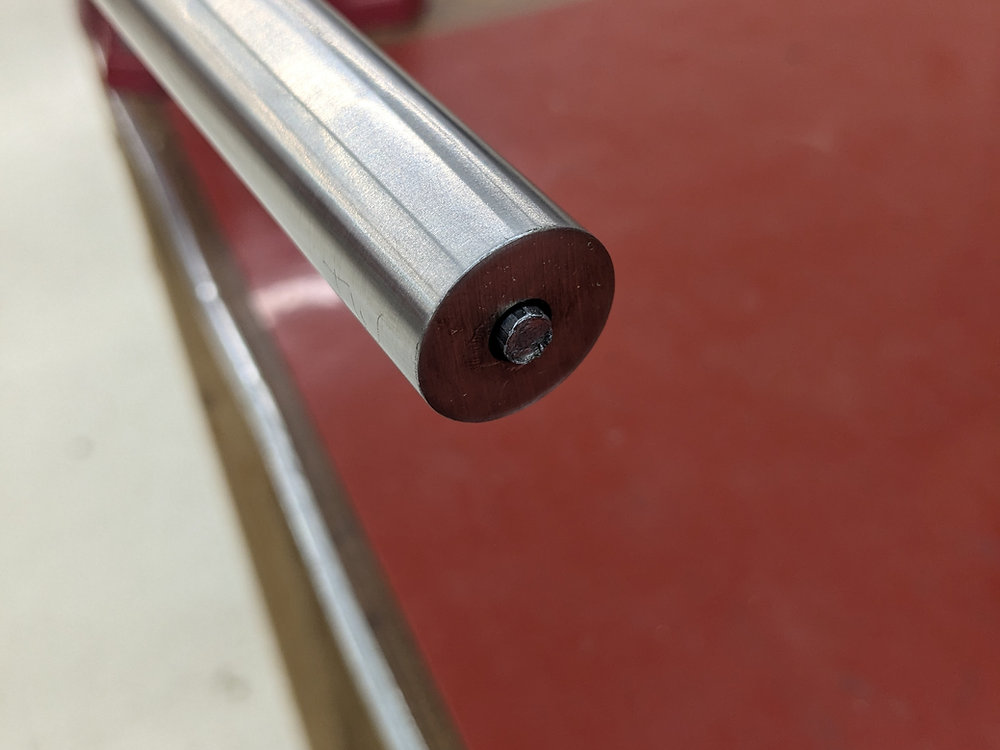
The muzzle end, showing the threads and the rifling the lap has to conform to. Allow the lead to cool for1-2 minutes, then remove it carefully. The lead lap is now perfectly molded to your bore. Keep a small part of the newly formed lap in the lands and grooves.

The formed lead lap mirrors the bore’s internal structure, allowing precise correction of tight or rough sections during lapping.
2. Prepare the Lap With Compound
Make sure the lead lap is still slightly warm so the RIGs grease/aluminum oxide mixture flows and adheres better.

A thin, even application of compound ensures controlled material removal too much compound increases the risk of over-lapping. Apply a thin, even coat of the lapping compound to the lead lap.

Compound application should be light and consistent. Excessive compound accelerates material removal and increases the risk of damaging the bore.
3. Begin Lapping, and Stay Off the Crown
Focus on Problem Areas:Start working the lead lap back and forth in the tight or rough spots identified during slugging and/or borescope inspection.

Controlled, repeatable strokes are used to work the lap through problem areas. This is where precision matters overworking the bore can permanently degrade accuracy. Avoid Overlapping Near the Crown:Do not over-lap near the crown, as a loose bore in this area will degrade accuracy. Use the brass centering tool to maintain alignment and ensure even contact with the rifling.
Monitor Progress:After about 10 minutes, stop and inspect the bore with a borescope. Measure the slug with a micrometer to confirm you are addressing tight spots without over-polishing.
4. Repeat Until the Bore Measures Even
Continue working the lap through the bore in smooth, controlled strokes. A typical barrel takesabout 40 minutesto lap, but this can vary based on the severity of inconsistencies.
Clean the bore periodically during lapping to inspect your progress and reapply the compound as needed.
5. Inspect, Clean and Slug It Again
Inspect the Bore:
After lapping, clean the bore thoroughly withSimple Green or acetoneto remove all traces of the lapping compound. Use a borescope to inspect the bore’s finish. You’re looking for:
A smooth, even bore diameter from chamber to crown.
Visible marks runningparallel to the bore, indicating proper polishing without over-lapping.

A properly lapped bore will show smooth, consistent surfaces with fine parallel marks not a mirror finish indicating controlled material removal without over-polishing.
Measure with a NECO Slug:
Slug the bore again to verify that the tight spots have been eliminated and the bore dimensions are consistent. Use a micrometer for precise measurements.

Understanding nominal bore and groove diameters is critical before lapping. Removing material without knowing baseline dimensions risks permanently altering barrel performance.
Where This Goes Wrong
Lapping Without Measuring First
If you have not slugged the bore and written the dimensions down, you are guessing with an abrasive. That is the whole failure mode in one sentence.
Chasing a Mirror Finish
A mirror bore looks impressive and can increase copper fouling, because it removes surface texture the barrel needs. The target is fine parallel marks, not a shine.
Over-Lapping the Bore
reduces rifling height
enlarges bore diameter
destroys accuracy
Over-Lapping Near the Crown
This is the worst of them. A loose muzzle means inconsistent bullet release, and the crown is the last thing the bullet touches. Use the brass centering tool and keep the lap away from the last inch.
What Happens If You Get This Wrong
You can:
permanently degrade accuracy
increase fouling
shorten barrel life
make the rifle harder to tune
And there is no undo button. Steel does not go back.

A Five-Minute Check You Can Do Tonight
Unload the rifle and check it twice. Run a clean patch on a snug jag from the chamber to the muzzle and pay attention to your hand, not to the patch. A bore with a tight spot tells you about it through the rod, as a place where the patch suddenly gets harder to push and then eases off again.
Feeling one does not mean you need lapping, and it does not tell you how big it is. What it tells you is that a proper slugging session would be worth the hour, before you change anything else about how the rifle is loaded or set up.
When to Hand This to a Shop
Hand lapping is a time-intensive, delicate process that requires both experience and the right tools. At Redleg Company, we specialize in barrel lapping as part of our accurizing services, ensuring every barrel is optimized for peak performance. While most new barrels we use are factory-lapped, older barrels, heavily used rifles, or barrels with uneven bores can benefit greatly from hand lapping.
If you’re unsure about the condition of your barrel or don’t have the tools to perform the process, contact us at Redleg Company. Let us take your rifle’s performance to the next level with professional lapping services you can trust.
Frequently Asked Questions
Does hand lapping improve accuracy?
It can, but only if the barrel has measurable inconsistencies. If the rest of the rifle is inconsistent, lapping will not solve the underlying problem and can make performance worse. The measurement comes first, always.
How do I know whether my barrel actually needs lapping?
Slug it and look at it. A NECO lead slug pushed through the bore and measured with a micrometer tells you where the tight and loose spots are. A borescope tells you what the surface looks like. Without both, you are guessing with an abrasive.
Can you ruin a barrel by lapping it?
Yes. Over-lapping permanently damages rifling, enlarges the bore and reduces the barrel's ability to stabilize a bullet. There is no undo button on removed steel.
Should I lap a brand new barrel?
Most modern match barrels are lapped at the factory. Additional lapping is usually unnecessary and often harmful. New barrels are where we say no most often.
How long does hand lapping take?
A typical barrel runs about 40 minutes, and 30 to 60 is the normal range depending on severity. Time is not the control though. Measurement and borescope inspection decide when it is done.
What is the biggest mistake in lapping?
Not knowing when to stop. Over-lapping is far more common than under-lapping, and the damage is permanent.
What is a lead lap, and why lead?
Lead is cast in place inside the bore so it takes the exact shape of the lands and grooves of that specific barrel. That is what lets it cut high spots without touching the areas that are already correct. A one-size tool cannot do that.
What compound do you use?
A shop-made mixture of 12 parts RIGs grease to 1 part 150 grit aluminum oxide, applied thin. Too much compound removes material faster than you can monitor it, which is how barrels get ruined.
Why heat the barrel before casting the lap?
About 150 degrees Fahrenheit lets the lead flow evenly and take the rifling cleanly, without distortion. A cold barrel gives you a lap that does not match the bore, which defeats the purpose.
Why not polish the bore to a mirror finish?
Because a mirror bore can increase copper fouling and removes surface texture the barrel needs. A properly lapped bore shows fine parallel marks, not a shine. Chasing a mirror is chasing the wrong target.
What is throat erosion, and can lapping fix it?
Heat and pressure wear the rifling just ahead of the chamber, and under a borescope it looks like alligator skin. Lapping can smooth the sharp edges. It cannot put steel back, so on a badly eroded throat the honest answer is a set-back or a new barrel.
Does lapping shorten barrel life?
It removes material, so by definition it spends some of the barrel. Done correctly on a barrel that needed it, the trade is worth it. Done on a barrel that did not need it, you have spent life for nothing.
Is lapping the same as a barrel break-in?
No. Break-in is a shooting and cleaning routine on a new barrel. Lapping is mechanical material removal with an abrasive. They are not substitutes for each other and one is permanent.
Can lapping fix a tight spot in a factory barrel?
That is one of the few cases where it is clearly the right tool. A measured tight spot is a real, located defect. Lapping targeted at that spot, verified by slugging again afterward, is exactly what the process is for.
Should I lap the barrel or just replace it?
Compare what the measurement says to the cost. If the bore has a correctable inconsistency, lapping is far cheaper. If the throat is gone or the bore is worn out, lapping is money spent on a barrel that is already finished.
Can I hand lap a barrel myself?
With a lead smelter, a borescope, slugs, a micrometer and the discipline to stop, yes. Without measurement, no, and that is not a judgment about skill. There is no way to know when to stop if you never knew where you started.
Fix the Right Problem First
Most shooters assume the barrel is the problem. Sometimes it is. Most of the time it is not, and the cost of being wrong about it is permanent. We do not guess, we diagnose the whole rifle: bore condition, system alignment, how the ammunition is interacting with it, and the real cause of the inconsistency.
Our accuracy diagnostic is $150. We shoot it, measure it, and hand you a graded report with the price of every option before you decide anything. Make sure you are solving the right problem before you start removing material.
Call Redleg Company at 507-677-6007, or bring it in. 430 Main Avenue, Chandler, Minnesota. Monday to Friday, 9 to 5. Full service list and current pricing at www.redlegguns.com/services-offered.

Take Your Reloading to the Next Level
Ready to improve your brass prep, shrink your groups, and make your precision rifle shoot like a laser? Download the Redleg Reloading Sheets and start keeping records that tell you something.

Disclaimer
The information provided in this blog post is intended for experienced gunsmiths, precision rifle builders, and advanced firearm enthusiasts who are familiar with gunsmithing tools, techniques, and safety procedures. Hand lapping a barrel is a highly technical process that requires specialized knowledge and equipment. Improper execution of this process can result in damage to the barrel, reduced accuracy, or personal injury.
Always ensure your firearm is unloaded and cleared before performing any gunsmithing work. Exercise caution when using lead, heat, and abrasive compounds, and always work in a safe, well-ventilated environment. Know your barrel's bore specifications before beginning, and avoid over-lapping or polishing the bore beyond the recommended guidelines.
If you are unsure about any part of the lapping process, or if you lack the necessary tools or expertise, consult a professional gunsmith or contact Redleg Company for assistance. Redleg Company is not responsible for any damage to barrels, firearms, or injury resulting from improper application of the techniques described in this blog.
Follow all local, state, and federal regulations related to firearms and gunsmithing. When in doubt, seek professional help to ensure your rifle operates safely and reliably.


Comments