
Custom .270 Win Rifle Build: A Blueprinted Remington 700 That Still Hunts Like a .270

Quick Answer: A custom .270 Win rifle build starts with a proven action, a match barrel, and the precision handwork most factory rifles never get. This one is a blueprinted Remington 700 wearing a Bartlein barrel, an H-S Precision stock, a TriggerTech trigger, and a Silencer Central suppressor, chambered for the 130gr Nosler AccuBond. It shoots a confirmed 3,240 fps with a 10.1 fps velocity SD. The cartridge is the same .270 your grandfather trusted. The accuracy is not.

Who this is for: Hunters who love the .270 Winchester and want it built to modern precision standards without abandoning the cartridge for the latest magnum.
You already own a .270, or you have hunted alongside one your whole life. You trust it. Then somebody at the range tells you the .270 is finished, that you need a 6.5 PRC or a 7 PRC to reach past 400 yards. So you start wondering if the rifle you love is holding you back.
It is not the cartridge holding you back. It is the build. Redleg Company is a precision rifle gunsmith and custom builder in Chandler, MN. Not a gun store. We took a .270 Win, kept everything hunters love about it, and built it to a standard that competes with anything chambered in a trendier round.
👉 New to the idea of building on a Remington 700? Read our breakdown of action blueprinting and ignition system work first, then come back here.

What Goes Into This Custom .270 Win Rifle Build
Here is the full component list for this rifle, with the reason each part was chosen.
Component | Spec | Why It Matters |
Action | Remington 700, fully blueprinted | Trued and squared for a repeatable, accurate foundation |
Barrel | Bartlein, .270 Win | Match-grade button-rifled barrel, one of the most respected blanks made |
Trigger | TriggerTech | Crisp, consistent break with zero creep |
Stock | H-S Precision | Rigid composite with full-length aluminum bedding block |
Bedding | Pillar bedded | Locks the action to the stock for shot-to-shot consistency |
Optic | Nightforce SHV | Rugged, repeatable tracking for field dialing |
Suppressor | Silencer Central | Reduced recoil, reduced report, NFA item |
Bullet | 130gr Nosler AccuBond | Bonded hunting bullet, classic .270 hunting weight |
Every one of those parts matters, but parts are not what makes this rifle shoot. The handwork between them is. A box of premium components assembled without truing the action and properly chambering the barrel is just an expensive factory rifle. The accuracy lives in the machining.
The Barrel Tells the Story
Here is the before. This target was shot at 100 yards on the original barrel, before the re-barrel. The bore near the muzzle was worn and the throat was eaten out, and you can see it on paper. The shots scatter instead of stacking, because a tired bore and a burned-out throat no longer grip and release the bullet the same way twice.
We could have cut an inch or so off the muzzle to chase the worn section, but the customer chose to replace the barrel outright with the Bartlein. That is the right long-term call on a rifle you intend to hunt hard.

Compare that to the powder-test target later in this post, shot at 200 yards on the new Bartlein barrel. Different distance, but the point is the condition of the bore, not a head-to-head group. A fresh match barrel on a trued action is what turns a .270 back into a tack driver.

Why Blueprint a Remington 700 for a Custom .270 Win Rifle Build
A factory Remington 700 is a great starting point. It is not a finished precision rifle. Out of the box, the action face is rarely square to the bore, the lug seat is rarely true, and the threads are rarely concentric. Each of those small errors stacks up into vertical stringing and inconsistent groups.
Blueprinting fixes that. We true the action face, square the lug abutments, single-point the threads, and bring everything back to concentric with the bore centerline. When the barrel is then chambered and torqued to a trued action, the cartridge sits in line with the bore every single time. That is the difference between a rifle that shoots one good group and a rifle that shoots it on demand.
The Remington 700 is one of the best platforms in the world to build on precisely because it responds so well to this work. We use it across calibers, from this .270 all the way up to the .30-06 Springfield, because a trued 700 is a proven, accurate foundation at a fraction of the cost of a custom action.

The Bartlein barrel is the other half of the equation. A match barrel with a consistent bore and a clean, properly cut chamber is what lets a hunting cartridge like the .270 punch well above its reputation. Bartlein is one of the most respected barrel makers in the country for a reason, and on a trued action it gives you a foundation that has nothing to apologize for next to any modern magnum.
The Load This Custom .270 Win Rifle Build Was Built Around
This rifle is set up for a confirmed handload developed for this exact chamber.
Spec | Value |
Bullet | 130gr Nosler AccuBond |
Powder | 61.4gr Reloder 26 |
Brass | Hornady |
Primer | CCI Large Rifle |
CBTO | 3.232" |
Muzzle velocity | 3,240 fps (24" barrel) |
Velocity SD | 10.1 fps |
G1 BC | 0.435 (Nosler published) |
3,240 fps with a 130gr bonded bullet is serious .270 performance. That is a flat-shooting, hard-hitting hunting load that handles deer and antelope across open country with confidence, and it does it out of a cartridge that has been quietly doing this job since 1925.
The number that tells the real story is the velocity SD of 10.1 fps. SD, or standard deviation, measures how consistent your velocity is from shot to shot. The lower the number, the tighter your shots stack vertically at distance, because every round is leaving the muzzle at nearly the same speed. A single-digit-to-low-double-digit SD is excellent for a hunting load, and it means this rifle holds its elevation downrange instead of throwing fliers high and low.

The 130gr Nosler AccuBond is a deliberate choice too. It is a bonded bullet that holds together on impact and drives deep while still opening reliably, which is exactly what you want on deer-sized game across open country.
If you want to understand why bullet construction matters more than most hunters think, read our deep dive into terminal ballistics and choosing the right bullet for the hunt.

The Brass Choice Most Hunters Overlook
Here is what makes that 10.1 SD worth talking about. It was shot on Hornady brass, and that brass choice was deliberate, not a compromise.
Lapua and Peterson make outstanding brass. They also cost real money. And a hunting case dropped in tall grass, kicked into the snow, or lost off the side of a ridge is gone for good. Hornady brass keeps the per-case cost low enough that losing one in the field does not sting. As the 10.1 fps SD proves, it gives up nothing that matters for a hunting rifle.
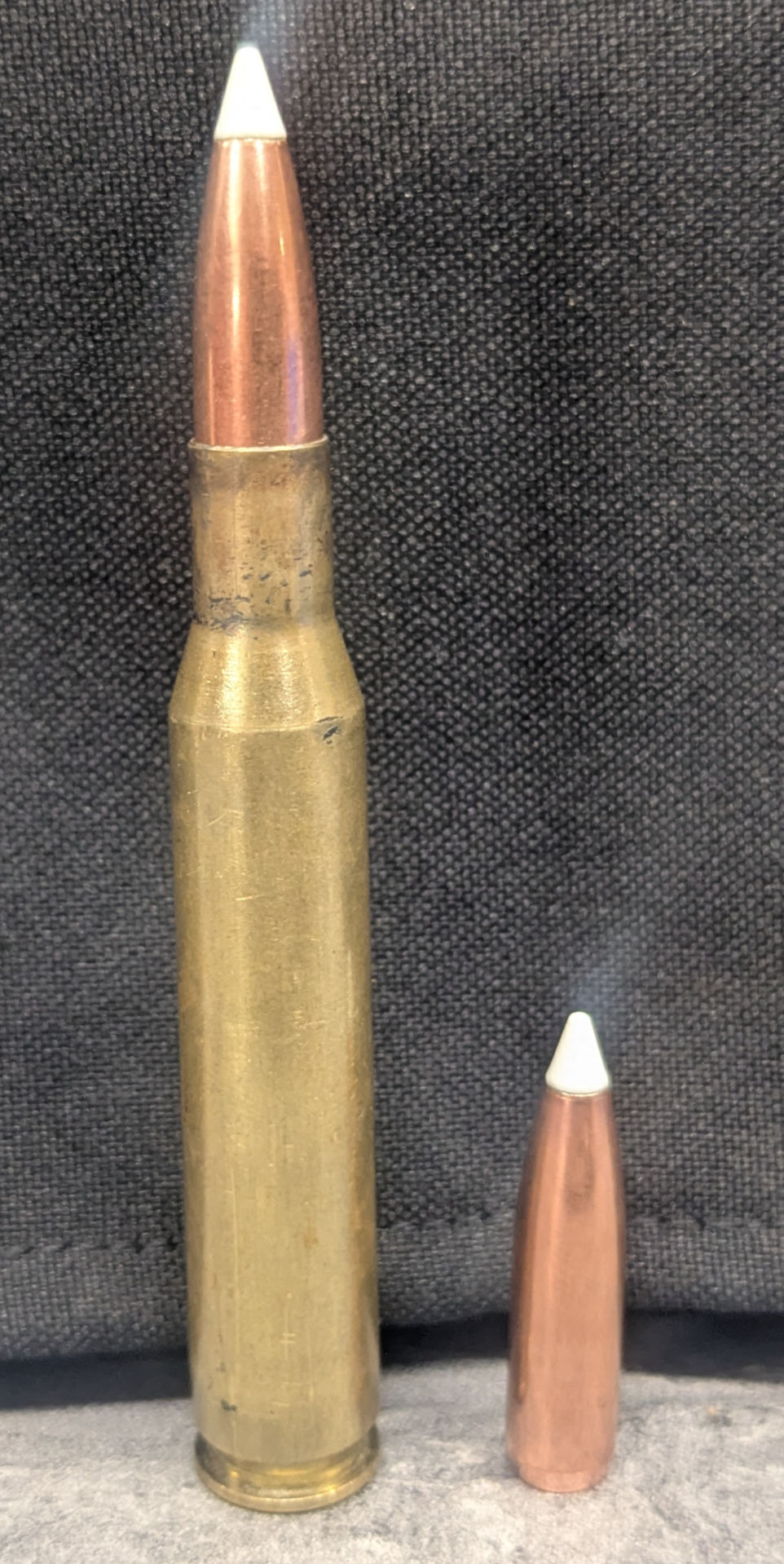
Premium brass earns its price on a benchrest line where you are policing every case and chasing the last quarter MOA. For a rifle that lives in a pack and gets hunted hard, smart brass selection is part of building it right. Matching the component to the mission is exactly the kind of decision that separates a built rifle from a parts list.
The load data shown here was developed specifically for the rifle described, using the exact components listed, in the chamber it was built to. This data is for reference only. It is not a starting load recommendation for any other firearm. Reloading data is not transferable between rifles. Always begin load development at published starting charges from a reputable reloading manual and work up carefully in your specific rifle. Redleg Company assumes no responsibility for the use of this data in any firearm other than the one it was developed for.
👉 Want a clean way to log your own load development? Grab our free reloading data sheet.

Why Add a Suppressor to a Custom Hunting Rifle
The Silencer Central can on this build is not for show. A suppressor cuts felt recoil, which helps a hunter spot their own impact and stay on target for a fast follow-up shot. It cuts the muzzle report, which protects hearing in the field where most hunters never wear plugs. And it adds a small amount of weight at the muzzle that helps the rifle hang steady on target.
Redleg holds a Type 7 FFL with a Class 2 SOT, so we handle suppressor builds and NFA transfers in house. You do not have to coordinate between a separate dealer and a gunsmith, and you do not have to ship your rifle to a third party to get the threading done right. It all happens at one bench.
What Most Shooters Get Wrong
Most shooters think the path to long-range capability is buying a new cartridge. They sell the .270 and chase the magnum of the year. What they are actually buying, most of the time, is a new factory rifle with the same untrued action and the same factory barrel they started with. They changed the headstamp and kept every accuracy problem they had before.
A blueprinted action and a match barrel will do more for real-world accuracy than jumping cartridges ever will. The .270 Win was never the limitation. The factory build was.
The Gunsmith Behind the Build
Redleg Company was founded by Brandon Lolkus, a U.S. Army National Guard combat veteran, retired. Brandon holds a gunsmithing and machining degree from Pine Technical College, trained under Gordy Gritters at the Extreme Accuracy Institute, and has spent over a decade owning and running the shop in Chandler, Minnesota. Redleg is a Type 7 FFL precision rifle gunsmith with a Class 2 SOT, and every barrel that leaves the shop is chambered to under .0005 inch runout. This is precision gunsmithing, not parts assembly.
Build It Once, Build It Right
Redleg ships completed custom builds back to customers across the country. We regularly complete rifles for hunters and shooters in Texas, Nebraska, South Dakota, and well beyond southwest Minnesota.
Current build slots are running 8 to 10 weeks out. We are in the slow season right now, which is exactly when you want to start a build. If you want a custom .270 Win rifle, or any custom build, ready before fall season, the conversation needs to start now, not in September when every other hunter has the same idea.
👉 Ready to talk through a build? Call 507-677-6007 or email info@redlegguns.com. Full service list and current pricing at redlegguns.com/services-offered.

Frequently Asked Questions
Is the .270 Win good enough for long-range hunting? Yes. With a match barrel, a quality bonded bullet like the 130gr AccuBond, and a load worked up to the chamber, a .270 Win is a capable open-country hunting rifle. This build runs 3,240 fps with a 10.1 fps velocity SD. The cartridge has never been the limiting factor. The build quality is.
Why blueprint a Remington 700 instead of buying a custom action? Blueprinting a Remington 700 trues the action you already have for far less than a new custom action, and it produces an accurate, reliable foundation. It is one of the best value steps in any custom rifle build, which is why we built this .270 on a trued 700.
What does it cost to build a custom .270 Win rifle? Cost depends on the components you choose, from the action work through the barrel, stock, trigger, and optic. The best way to get an accurate number is to call the shop and walk through your goals. Full pricing on individual services is listed at redlegguns.com/services-offered.
Why use Hornady brass instead of Lapua or Peterson? For a hunting rifle, Hornady brass costs less per case and still delivered a 10.1 fps velocity SD in this build. Losing a case in the field does not hurt as much. Premium brass makes more sense for benchrest and match shooting where every case is accounted for.
Can Redleg build my rifle if I do not live in Minnesota? Yes. Redleg ships completed builds to customers nationwide. We complete work for hunters and shooters across the country every year.
Does a suppressor really help on a hunting rifle? Yes. A suppressor reduces felt recoil, cuts the muzzle report to protect your hearing, and adds steadying weight at the muzzle. As a Class 2 SOT, Redleg handles the suppressor and the NFA transfer in house.
How long does a custom rifle build take at Redleg? Current build slots are running 8 to 10 weeks out. That timeline moves fast as hunting season approaches, so starting early is the safest way to have a rifle ready for fall.
What to Read Next
If you want to see another way to stiffen a Remington 700 action for better accuracy, read Elevate Your Accuracy: The Power of Epoxy Sleeving a Remington 700.

It shows a different precision upgrade applied to the same platform, the kind of handwork that separates a built rifle from a parts list.
Build It the Right Way
The .270 Win does not need replacing. It needs building. A trued action, a match barrel, a stable stock, and a load developed for the chamber will outperform a factory magnum every day of the week. The cartridge your family has trusted for a century is still one of the best open-country hunting rounds ever made, when it is built right.
If you are serious about building a .270 the right way, not guessing, reach out.
507-677-6007 info@redlegguns.com Which article brought you here? Let us know when you call.
Last updated: June 2026 | Data based on rifles built, tested, and diagnosed by Redleg Company, Chandler, MN.


Comments