
.270 Winchester vs 6.5 PRC: A 100 Year Old Cartridge Meets a Modern Magnum

Updated: 9 hours ago
Quick Answer
To settle the .270 Winchester vs 6.5 PRC argument honestly, we loaded the identical Sierra 140 grain Tipped GameKing in both cartridges, then loaded both hot, and ran the numbers from a confirmed Redleg build. The result: a hot .270 matches the 6.5 PRC on energy with the same bullet inside 500 yards, but it never catches the PRC on wind drift, because the 6.5mm bullet carries the higher ballistic coefficient. Inside 400 yards the .270 is still one of the best hunting cartridges ever made. Past 400 yards in wind, the 6.5 PRC wins. The build, the bullet, and the shooter decide the outcome.
Who This Is For
Serious deer and elk hunters and precision shooters anywhere in the United States deciding between a classic American hunting cartridge and a modern long-range magnum.

The .270 Winchester has been killing big game in North America for 100 years. The 6.5 PRC has been on the market for 7 years. Both cartridges work. Both have put bear, elk, mule deer, and whitetail on the ground from Redleg-built rifles. The question is not which one is better. The question is which one fits how you actually hunt. To answer it without the usual hand-waving, we ran the exact same bullet through both. That comparison is further down, and it is the cleanest one you will find anywhere.
For the related comparison: 6.5 Creedmoor vs 6.5 PRC: Real Dope Card Data from a Working Gunsmith

Quick Answer Table: 270 Winchester vs 6.5 PRC
Spec | .270 Winchester | 6.5 PRC |
Year introduced | 1925 | 2018 |
Parent case | .30-06 Springfield | .375 Ruger |
Action length | Long action | Short action |
Bullet diameter | .277 inch | .264 inch |
Typical hunting bullet weight | 130 to 150 gr | 140 to 156 gr |
Standard factory twist | 1:10 | 1:8 |
Confirmed Redleg MV (this build) | 3,240 fps (130 gr Accubond) | 3,045 fps (142 gr SMK) |
Recoil energy (typical hunting rifle) | 17 to 20 ft-lbs | 22 to 26 ft-lbs |
Practical barrel life | 3,500 to 5,000 rounds | 1,500 to 2,500 rounds |
Factory ammo availability | Everywhere | Growing |
Best use case | Inside 400 yards, mixed cover | 400 to 700 yards, open country |
The .270 Winchester: 100 Years of Proven Performance
The .270 Winchester was introduced in 1925 by Winchester for the Model 54 bolt action rifle. The cartridge was a necked-down version of the .30-06 Springfield case, designed to drive a 130 grain .277 inch bullet at velocities the hunting community had not seen at the time.
Initial reception was lukewarm. The hunting world in the 1920s was skeptical of smaller caliber bullets at high velocity. The conventional wisdom held that big game required heavier, slower bullets. The .270 challenged that assumption.
Jack O'Connor changed that. Starting in the 1930s and continuing for over 40 years as the shooting editor of Outdoor Life, O'Connor championed the .270 Winchester relentlessly. He hunted sheep, deer, elk, and bear with it across North America and abroad. He wrote books and hundreds of articles documenting clean kills on every species the cartridge was used for. By the 1950s, the .270 Winchester had become the American all-around hunting cartridge.
Generations of hunters built their hunting practice around the .270. Many of them are still alive, still hunting, still shooting their .270 Winchesters with the same load they have used for decades. The cartridge earned that loyalty the hard way. It performed every time the trigger was pulled.
The standard twist rate of 1:10 limited bullet selection for decades. Heavier high BC .277 inch bullets were not practical in factory twist rates, which constrained the cartridge to lighter, faster projectiles. That trade-off worked because the .270 Winchester was never designed for the modern long range hunting that dominates the precision shooting conversation today. It was designed to put 130 to 150 grain bullets onto big game inside 400 yards with authority. It did that job and it still does it.
The .270 Winchester remains one of the most popular hunting cartridges in the United States in 2026. Factory ammunition is at every sporting goods store, every gas station that sells ammo in deer country, and every reloading bench in North America has access to the components.
The 6.5 PRC: A Modern Magnum Built Around Modern Bullets
The 6.5 PRC was introduced by Hornady in 2018. Where the .270 Winchester was designed in 1925 for the bullets and powders of that era, the 6.5 PRC was designed from the start around modern long, heavy, high ballistic coefficient bullets.
The case is based on the .375 Ruger parent case, beltless, with a sharp 30 degree shoulder. The case design is short action compatible, unlike most traditional magnums which require a long action and a longer bolt throw. The cartridge runs 140 to 156 grain 6.5mm bullets at velocities that deliver them flat at distance with minimal wind drift.
In 7 years on the market, the 6.5 PRC has displaced a significant chunk of the magnum hunting market that was previously held by traditional cartridges. It is the dominant new build cartridge for western hunting in 2026. The reason is straightforward: the cartridge does exactly what modern long range hunters need it to do, in a short action package, with reasonable barrel life and growing factory ammo availability.

The 6.5 PRC is not a replacement for the .270 Winchester. It is a different tool designed for a different mission. Where the .270 was the all-around American hunting cartridge for shots inside 400 yards, the 6.5 PRC is purpose-built for hunters who routinely take shots from 400 to 600 yards in open western terrain.
For a complete look at the modern PRC cartridge family including the 7 PRC and 300 PRC, see 6.5 PRC vs 7 PRC vs 300 PRC: Complete Guide to the PRC Cartridge Family.

The Traditional Hunter Perspective
Some hunters spent their lives reading O'Connor, building their hunting practice around the .270, and have no interest in chasing new cartridges. That is not stubbornness. That is the result of decades of personal experience with a cartridge that performed every time they pulled the trigger.
There is no shame in sticking with what works. Hunters who already own a .270, shoot it well, and use it inside the ranges it was designed for are not behind the times. They are using the cartridge for exactly what it was built to do.
The .270 Winchester earned its loyal following the hard way: through generations of clean kills on big game across the continent. Nothing the precision rifle industry has done since 1925 changes that. The .270 still kills deer and elk cleanly inside 400 yards with the right bullet in the right hands. Modern bullets in .277 caliber have closed some of the BC gap that limited the .270 in past decades, and a properly built .270 today is a more capable rifle than a factory .270 was 30 years ago.
The hunters who should stay with the .270: anyone who already shoots one well, hunts inside 400 yards, prefers traditional cartridge availability, and does not want to chase the latest thing. The barrel life is significantly better than a 6.5 PRC. Factory ammo is everywhere.
A Documented Modern .270 Winchester Build at Redleg
A long-time Redleg client has hunted with the same .270 Winchester for years and has taken four species of North American big game with it: black bear, elk, mule deer, and whitetail.
The rifle is a Remington 700, accurized at Redleg. The build specifications:
Action: Remington 700
Barrel: Bartlein 24 inch
Stock: H-S Precision, bedded at Redleg
Lugs lapped in the cocked position
Gre-Tan firing pin installed
TriggerTech trigger
Optic: Nightforce SHV
Suppressor: Silencer Central
Cartridge: .270 Winchester
The rifle has been through the full Redleg accurizing process. Action blueprinted. Ignition system addressed with the Gre-Tan firing pin assembly. Bedding completed with the H-S Precision stock. Lug contact verified in the cocked position. Trigger replaced with a TriggerTech for consistent break and reset.

Confirmed load on this rifle:
Powder: Reloder 26, 61.5 grains
Bullet: 130 grain Nosler Accubond
Brass: Hornady
Primer: CCI Large Rifle
CBTO: 3.232 inches
Confirmed muzzle velocity: 3,240 fps
Load date: October 2020 (still running this load in 2026)
This is a real-world hunting load that has accounted for four species of big game across multiple seasons. The rifle is set up exactly the way a serious .270 shooter would build one in 2026 if they wanted to maximize what the cartridge is capable of.

The load data shown here was developed specifically for the rifle described, using the exact components listed, in the chamber it was built to. This data is for reference only. It is not a starting load recommendation for any other firearm. Reloading data is not transferable between rifles. Work up your own load using published manual data and a chronograph.
For details on the action blueprinting and ignition system work performed on this rifle, see Action Blueprinting and Ignition System Work: What Most Gunsmiths Get Backwards.

A Documented Modern 6.5 PRC Build at Redleg
The 6.5 PRC velocity used in the comparison below is not a manual estimate. It is the confirmed average from a Redleg-built rifle for a client near Fulda, MN, captured on a LabRadar over a 28-shot string.

Build and load:
Action: Mausingfield
Barrel: 24 inch, 1 in 8 twist
Cartridge: 6.5 PRC
Bullet: 142 grain Sierra MatchKing, G1 BC 0.626
Powder: Reloder 26, 55.2 grains
Brass: Hornady
Primer: CCI No. 34 Large Rifle
CBTO: 2.145 inches
Confirmed average muzzle velocity: 3,045 fps
Standard deviation: single digit across the final load
Chronographed at 30 degrees F
A note on bullets, because it matters and because most content gets this backwards. The 3,045 fps above was shot with the 142 grain Sierra MatchKing, a match bullet, not a hunting bullet. Match bullets do not expand reliably on game and should not be used for hunting. We use that confirmed velocity here only as a real-world velocity anchor for this rifle. The 140 grain Tipped GameKing hunting bullet used in the comparison below is two grains lighter and runs right in the same 3,045 to 3,100 fps window from this barrel, so 3,045 fps is a conservative, defensible number for the hunting bullet in the dope card.
The load data shown here was developed specifically for the rifle described, using the exact components listed, in the chamber it was built to. This data is for reference only. It is not a starting load recommendation for any other firearm. Reloading data is not transferable between rifles. Work up your own load using published manual data and a chronograph.
A Critical Note on Bullet Selection for Hunting
Before the numbers, the bullet question, because it decides whether any of this matters in the field. The hunter's job is to put a bullet through the vitals of the animal cleanly. A high BC number on paper does not help if the bullet does not penetrate to the vitals when the shot is taken.
For the comparison below we chose the Sierra 140 grain Tipped GameKing in both cartridges. It is a true hunting bullet, a polymer-tipped boat-tail with a tapered jacket built to expand on game, available in both .277 and .264 diameter, which is exactly why it lets us compare the two cartridges fairly.
A word on what not to do. Long-range hunting bullets with thin jackets and soft cores, like some marketed for extreme range, are designed to expand at the lower velocities encountered past 400 yards. That same construction can fragment prematurely at close range and high impact velocity, and may fail to penetrate adequately on larger-framed game like elk, especially through heavy shoulder bone or on quartering shots. For most North American big game across mixed distances, a bonded bullet like the Nosler Accubond or Nosler Accubond Long Range, the Federal Terminal Ascent, or a controlled-expansion monolithic like the Barnes LRX delivers more consistent terminal performance. Match bullets like the Sierra MatchKing should never be used on game at all. They do not expand reliably.
For a complete breakdown of bullet selection for hunting, including bonded vs monolithic vs match construction, see Choosing the Right Bullet for the Hunt: Why Most Hunters Get This Wrong

Real Dope Card: 270 Winchester vs 6.5 PRC, Same 140 gr Bullet, Four Loads Compared Apples to Apples
We took the same bullet for every load. Each one below uses the Sierra 140 gr Tipped GameKing, with a 200 yard zero, a 10 mph full-value crosswind, and a 24 inch barrel. This is the truest apples-to-apples comparison possible: identical bullet, identical conditions, only the cartridge and the velocity change.

.270 factory, 2,960 fps: Sierra GameChanger 140 gr TGK, chronographed from the Redleg-built Remington 700, BC 0.508
.270 hot, 3,115 fps: maximum-effort handload, chronographed from the same Remington 700, over standard book max (see warning)
6.5 PRC real, 3,045 fps: chronographed average, from the Redleg-built Mausingfield, BC 0.563
6.5 PRC hot, 3,155 fps: maximum-effort handload, chronographed from the same Mausingfield, over standard book max (see warning)
Distance | Metric | .270 Factory 2,960 | .270 Hot 3,115 | 6.5 PRC Real 3,045 | 6.5 PRC Hot 3,155 |
300 yd | Drop (in) | -6.5 | -5.7 | -5.9 | -5.4 |
Wind (in) | 5.7 | 5.3 | 4.9 | 4.7 | |
Velocity (fps) | 2,416 | 2,553 | 2,543 | 2,640 | |
Energy (ft-lbs) | 1,815 | 2,026 | 2,009 | 2,167 | |
400 yd | Drop (in) | -18.9 | -16.8 | -17.1 | -15.8 |
Wind (in) | 10.5 | 9.8 | 9.0 | 8.6 | |
Velocity (fps) | 2,249 | 2,381 | 2,387 | 2,481 | |
Energy (ft-lbs) | 1,573 | 1,762 | 1,771 | 1,914 | |
500 yd | Drop (in) | -38.2 | -33.9 | -34.5 | -31.8 |
Wind (in) | 17.1 | 15.9 | 14.5 | 13.8 | |
Velocity (fps) | 2,089 | 2,215 | 2,237 | 2,328 | |
Energy (ft-lbs) | 1,356 | 1,525 | 1,555 | 1,685 | |
600 yd | Drop (in) | -65.5 | -58.2 | -58.8 | -54.2 |
Wind (in) | 25.5 | 23.7 | 21.6 | 20.5 | |
Velocity (fps) | 1,935 | 2,056 | 2,092 | 2,180 | |
Energy (ft-lbs) | 1,164 | 1,314 | 1,361 | 1,477 |
A warning on both hot loads. The 3,115 fps .270 and the 3,155 fps 6.5 PRC are maximum-effort handloads chronographed from these specific rifles. They run at or above standard published pressure for each cartridge with a 140 grain bullet. Most loading manuals top out a 140 grain .270 around 3,000 to 3,020 fps and a 140 grain 6.5 PRC around 3,030 to 3,065 fps in a 24 inch barrel. Reaching the velocities shown requires pushing pressure, and pressure that high shortens brass life, accelerates throat erosion, and can be unsafe in another rifle. These numbers are real for these two rifles. They are not load recommendations. Never start at a maximum charge, always work up with a chronograph and watch for pressure signs, and verify every load in your specific rifle.
What the Table Tells Us
The hot loads do not change who wins. Push both cartridges to their pressure ceiling and the 6.5 PRC keeps every advantage it had at standard pressure. At 500 yards the hot PRC drifts 13.8 inches and the hot .270 drifts 15.9. Roughly the same 2 inch wind gap that existed before either was loaded hot. Velocity going up does not fix a BC deficit. It never has.
A hot .270 matches a standard PRC on energy, not on wind. The hot .270 at 3,115 fps carries 1,525 ft-lbs at 500 yards, dead even with the real PRC's 1,555. So the .270 shooter who handloads hot gets PRC-class energy with the same bullet. What he does not get is the PRC's wind performance. The standard PRC still drifts less than the hot .270 at every distance.
The hot 6.5 PRC pulls away from everything. At 500 yards it drifts the least at 13.8 inches, drops the least at 31.8 inches, and hits the hardest at 1,685 ft-lbs of all four loads. If you are going to run a cartridge hot, the PRC rewards it more than the .270 does, because you are stacking extra velocity on top of an already higher BC.
Bottom line across all four loads: velocity is the .270's only lever, and it is not enough. Even loaded hot, the .270 matches the PRC on energy but never catches it on wind. The 6.5 PRC wins the wind at standard pressure, wins it again when both are loaded hot, and wind is what determines a clean hit at distance. The .270 remains an excellent cartridge for what it was built for. It just cannot out-ballistic a cartridge designed a century later around the exact bullets that beat wind.
When Each Cartridge Wins
The .270 Winchester wins when:
You already own one and shoot it well
Your hunting is inside 400 yards in timber or mixed country
You want factory ammo available at every store that sells ammo
You want a barrel that lasts 3,500 to 5,000 rounds or more
You hunt deer and elk in conditions where heavy magnum recoil is unnecessary
You value the 100 years of proven killing performance the cartridge has documented
The 6.5 PRC wins when:
You are building new for serious long range hunting
You hunt open western terrain where shots routinely stretch past 400 yards
You shoot in variable or strong winds where ballistic coefficient matters more than raw velocity
You want modern high BC bullets and the velocity to deliver them flat at distance
You want short action compatibility in a magnum cartridge
You want the cartridge that is dominating new precision builds in 2026
You want one rifle that handles deer, elk, antelope, and bear with one load
The .270 Winchester vs 6.5 PRC decision comes down to how you hunt, not which cartridge is theoretically better. Both cartridges put bullets in the kill zone on deer and elk inside reasonable hunting range. The .270 Winchester is not obsolete. The 6.5 PRC does not magically make a .270 shooter a better hunter. The cartridge is where you start. The build is where the accuracy comes from. The bullet is what does the work on the animal.
For another perspective on hunting cartridge selection with the 6.5 PRC, see .25 Creedmoor vs 6.5 PRC: Which One Should You Actually Hunt With?
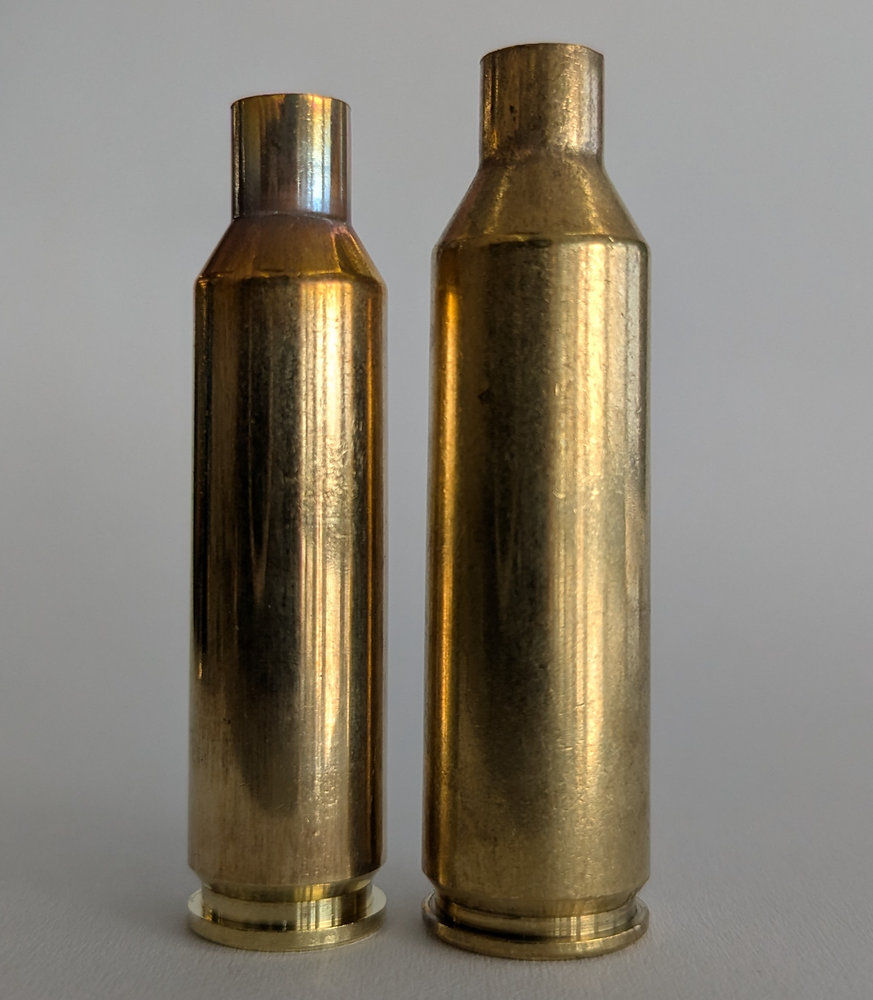
The Build Decision for New Buyers
The .270 Winchester vs 6.5 PRC build decision depends on whether you are starting fresh or working with a rifle you already own. If you already own a .270 Winchester that you shoot well, keep shooting it. There is no reason to rebarrel a working rifle just to chase newer numbers. A Redleg accurizing service on the rifle you already own will produce more accuracy gain than switching cartridges.
If you are building new and your hunting is inside 400 yards in timber, mixed cover, or moderate wind conditions, the .270 Winchester remains a legitimate choice. The factory ammo is everywhere. The barrel will outlast most shooters. The cartridge has killed every big game animal on the continent and continues to do so every season.
If you are building new and you hunt open western terrain where shots stretch to 500 yards, or you want the latest in long range hunting performance with heavy high BC bullets, the 6.5 PRC is the more capable cartridge for that mission. The trade-off is shorter barrel life and slightly more limited factory ammo availability.
For a complete custom build at Redleg in either cartridge, the action work, bedding, lug lapping, ignition system service, and barrel chambering process are the same. The cartridge changes the bullet selection, the load development, and the barrel life. The accuracy comes from the build, not the cartridge.
For the complete breakdown of what produces real rifle accuracy, see What Actually Makes a Rifle Accurate: A Complete System Breakdown

Barrel Life Reality
The .270 Winchester typically delivers 3,500 to 5,000 rounds of accurate barrel life, sometimes significantly more with careful loading and proper cleaning. The cartridge is not overbore. It runs at moderate pressures with bullets the bore was designed for.
For a estimate of your barrel life play with the Redleg barrel life calculator, see https://www.redlegguns.com/barrel-life-calculator

The 6.5 PRC typically delivers 1,500 to 2,500 rounds of accurate barrel life. The cartridge is overbore relative to its bore diameter, which produces faster throat erosion. Hunters who shoot a lot or compete will rebarrel a 6.5 PRC every few years. Hunters who shoot a box of ammo a season will get a decade or more out of a 6.5 PRC barrel before accuracy starts to decline.
For the client's .270 documented above, the rifle is on its original barrel and continues to deliver hunting accuracy after multiple seasons. A 6.5 PRC barrel under similar use would likely need replacement somewhere between season 5 and season 10 depending on round count.
For the complete pillar bedding methodology used on every Redleg build, see Pillar Bedding a Rifle: A Master Gunsmith's Guide

What Redleg Sees in the Shop
Brandon Lolkus is the owner of Redleg Company, a precision rifle gunsmith based in Chandler, Minnesota. Redleg operates under a Type 7 FFL with Class 2 SOT. Brandon holds a gunsmithing and machining degree from Pine Technical College and trained directly under Gordy Gritters at Extreme Accuracy Institute. Brandon is a combat veteran, U.S. Army National Guard, retired.
Every barrel chambered at Redleg runs to under .0005 inch runout. Every action that goes through accurizing at Redleg gets the full sequence: ignition system first, action blueprinting second, lug lapping in the cocked position third, bedding next, barrel work last.
Redleg builds rifles in both .270 Winchester and 6.5 PRC. The build process is the same. The cartridge difference shows up in load development, bullet selection, and barrel life expectations, not in the accurizing work itself.
Redleg ships completed builds and service work nationwide. Current build wait is 8 to 10 weeks once parts are in.
Want to track your own load development and dope data the way Redleg does it? Download the free Redleg reloading sheets to start documenting your loads, velocities, and dope cards in the same format used in the shop
Frequently Asked Questions
Does the .270 Winchester overtake the 6.5 PRC with the same bullet? No. With the identical Sierra 140 grain Tipped GameKing in both, the 6.5mm version carries a higher ballistic coefficient (0.563 vs 0.508) and the PRC starts faster from a real Redleg build. A hot-loaded .270 can match the PRC on energy inside 500 yards, but it drifts more in the wind at every distance. To beat the PRC on wind, the .270 would need to exceed 3,300 fps with a 140 grain bullet, which a standard .270 case cannot safely do.
Is the .270 Winchester obsolete? No. The .270 Winchester remains one of the most popular hunting cartridges in the United States in 2026. It kills deer, elk, bear, and other big game cleanly inside 400 yards with the right bullet in the right hands. The cartridge is not obsolete. It is simply optimized for a different mission than modern long range cartridges like the 6.5 PRC.
Should I rebarrel my .270 Winchester to 6.5 PRC? Probably not. If your .270 shoots well and you hunt inside 400 yards, there is no practical reason to switch. The cost of a rebarrel plus new dies, brass, and load development is significant. An accurizing service on the rifle you already own will produce more accuracy improvement than changing cartridges.
What is the maximum effective range of a .270 Winchester for big game hunting? With a 130 to 150 grain bullet at typical .270 Winchester velocities, the cartridge maintains lethal energy on deer and elk to approximately 600 yards. Practical accuracy and wind drift considerations typically limit ethical hunting shots to 400 to 500 yards depending on the shooter, the rifle, and the conditions.
What is the difference in recoil between .270 Winchester and 6.5 PRC? The 6.5 PRC produces noticeably more recoil than the .270 Winchester. In comparable rifles, the .270 Winchester generates approximately 17 to 20 ft-lbs of recoil energy. The 6.5 PRC generates approximately 22 to 26 ft-lbs. Most hunters can shoot the .270 Winchester comfortably from field positions where the 6.5 PRC requires more attention to shooting technique.
Can I shoot heavier bullets in a .270 Winchester? The standard 1:10 twist rate in factory .270 Winchester barrels limits bullets to approximately 150 grains maximum for reliable stabilization. Custom barrels with faster twist rates of 1:8 or 1:9 can stabilize heavier 165 to 175 grain .277 caliber bullets, which closes some of the BC gap with modern long range cartridges. A custom-built .270 Winchester with a faster twist rate is a more capable rifle than a factory .270 with the standard 1:10 twist.
What is the cost difference between a .270 Winchester build and a 6.5 PRC build at Redleg? The build cost is essentially the same. The cartridge difference affects barrel selection, dies, and load development components but does not significantly change the labor or service cost. Full service list and current pricing at redlegguns.com/services-offered.
Why does the 6.5 PRC drift less in the wind than the .270 Winchester? Ballistic coefficient. At the same bullet weight, the narrower 6.5mm bullet is longer and more aerodynamic than the .277 bullet, so it carries a higher BC. The Sierra 140 grain Tipped GameKing is BC 0.563 in 6.5mm and 0.508 in .277. The higher BC bullet resists wind drift more effectively at all distances, even when the .270 starts faster.
What bullets should I use for hunting elk with a 6.5 PRC? Bonded bullets and controlled-expansion monolithics. The 142 grain Nosler Accubond Long Range, the 140 grain Federal Terminal Ascent, and the 127 grain Barnes LRX are all proven elk bullets in 6.5 PRC. Elk are large-framed animals and the bullet has to get through significant muscle and bone to reach the vitals. Bonded and monolithic construction is what makes that happen reliably.
What bullets should I use for hunting elk with a .270 Winchester? The 130 grain Nosler Accubond is a proven elk bullet in .270 Winchester at typical hunting distances. The 140 grain Accubond, 140 grain Federal Terminal Ascent, and 130 grain Barnes TTSX are also excellent choices. For elk specifically, bullet construction matters more than caliber or BC. A well-constructed bullet of adequate weight in the .270 Winchester delivers complete penetration on broadside shots and consistent performance on quartering shots.

Ready to Build the Right Rifle for How You Hunt
Whether the answer is .270 Winchester or 6.5 PRC depends on how you hunt, where you hunt, and what you have already invested in. Both cartridges build into excellent precision hunting rifles. Both deliver consistent accuracy when the build is done correctly. The cartridge is the starting point. The accurizing work, the bedding, the ignition system, and the load development are where the accuracy comes from. The bullet is what does the work on the animal.
Current build wait is 8 to 10 weeks. If you want a rifle ready before fall season, the conversation needs to start now.
Bring it in, ship it in, or call to discuss what you want to build. Diagnostic evaluations and build consultations include cartridge selection guidance and bullet recommendations based on your actual hunting application.
507-677-6007 info@redlegguns.com
Which post brought you here? Tell us when you call.
The four-load comparison uses the Sierra 140 grain Tipped GameKing, G1 BC 0.508 in .277 and 0.563 in .264, both from Sierra published data. All four muzzle velocities are chronographed averages from two Redleg-built rifles: a Remington 700 in .270 Winchester and a Mausingfield in 6.5 PRC, both 24 inch barrels. Drop, wind, and energy figures are calculated with a G1 point-mass solver at a 200 yard zero, 10 mph full-value crosswind, validated against the client's range card. Hot load figures exceed standard published pressure and are shown for comparison only, not as load recommendations.


Comments