
6.5 PRC vs 7 PRC vs 300 PRC: Complete Guide to the PRC Cartridge Family

Updated: 4 hours ago
A Gunsmith’s Guide to 6.5 PRC, 7 PRC, and 300 PRC

You just spent $4,200 building a custom elk rifle chambered in 7 PRC. You handloaded 100 rounds. You practiced all spring. Then opening morning at 320 yards, that bull stands broadside and you send it. Perfect shot. Except the bullet fragments on the shoulder, the elk runs 400 yards into thick timber, and you spend the next four hours tracking blood instead of packing meat.
Your rifle wasn't the problem. Your bullet choice was.
Most hunters picking a cartridge from the PRC cartridge family base their decision on velocity charts and ballistic coefficient tables. They compare 6.5 PRC vs 7 PRC vs 300 PRC based on numbers at the muzzle, not performance at 300 yards on a quartering elk. Then they pair that cartridge with the wrong bullet, wrong barrel length, wrong suppressor, or wrong twist rate, and wonder why a $4,000 custom rifle doesn't perform the way they expected.
Here's the reality: the PRC cartridge family (6.5 PRC, 7 PRC, 300 PRC) represents some of the most thoughtfully engineered modern hunting cartridges available today. But cartridge selection is only one variable in a complete rifle system. Chamber geometry, freebore length, barrel twist, suppressor configuration, bullet construction, and load development all determine whether your PRC rifle performs like a precision instrument or an expensive disappointment.
This guide breaks down exactly how each cartridge in the PRC cartridge family performs in real hunting rifles, which one fits your actual hunting application, and what mistakes to avoid when building a PRC rifle system.
Who This Article Is For
This is for you if:
You're building a custom hunting rifle and trying to decide between 6.5 PRC, 7 PRC, or 300 PRC
You hunt elk, mule deer, or other Western big game and want a modern long-range platform
You're considering a suppressed hunting rifle and need to understand barrel length trade-offs
You reload and want to maximize the performance of PRC cartridges
You're confused by marketing hype and want to understand what each PRC cartridge actually does in the field
You hunt in the Midwest or Western states where shots regularly extend past 300 yards
This is NOT for you if:
You only shoot inside 200 yards (a standard cartridge like 6.5 Creedmoor or .308 will serve you just as well for less money)
You're looking for a single "best" answer without understanding trade-offs
You don't reload and aren't willing to invest in proper load development (factory ammo works, but handloading unlocks PRC performance)
If you're serious about building a rifle in the PRC cartridge family and want to understand which cartridge actually fits how you hunt, this comparison will save you from expensive mistakes.
Quick Answer: PRC Cartridge Family Comparison
Cartridge | Typical Bullet | Velocity | Best Use | Recoil | Barrel Life |
6.5 PRC | 140-147 gr | ~2,950 fps | Deer, antelope, lightweight builds | Mild | 1,500-2,500 rounds |
7 PRC | 175-195 gr | ~2,975 fps | Elk, mule deer, all-around Western hunting | Moderate | 1,200-2,000 rounds |
300 PRC | 208-230 gr | ~2,800 fps | Elk, moose, heavy game, maximum energy | Heavy | 1,000-1,500 rounds |
The short answer: If you want a lightweight suppressed rifle for deer-sized game with minimal recoil, the 6.5 PRC is hard to beat. If you need versatile Western performance for elk and mule deer with manageable recoil, the 7 PRC is the sweet spot. If you want maximum terminal energy for large game and aren't concerned about recoil, the 300 PRC delivers.
Now let's break down why.
What Is the PRC Cartridge Family?
The PRC cartridge family refers to a group of modern rifle cartridges engineered to maximize the performance of long, high-ballistic-coefficient bullets in precision hunting rifles.
PRC stands for: Precision Rifle Cartridge
Unlike traditional magnum cartridges developed decades ago (7mm Remington Magnum, 300 Winchester Magnum), the PRC cartridge family was designed from the beginning to support modern bullet geometry, long-range shooting, and efficient powder column performance.
Key design features include:
Minimal case taper (improves powder efficiency)
Long freebore (allows seating long bullets without compressing powder)
Efficient powder column geometry (consistent ignition)
Fast twist barrel compatibility (stabilizes modern high-BC bullets)
These features allow shooters to run longer, more aerodynamic bullets without sacrificing powder capacity or magazine length. This is the primary advantage of the PRC cartridge family over legacy magnum cartridges.
Why PRC Cartridges Were Designed
Before the PRC cartridge family was introduced, two cartridges dominated long-range hunting rifles:
7mm Remington Magnum
300 Winchester Magnum

Both remain extremely effective hunting cartridges and are still widely used across North America. However, these cartridges were originally designed decades before modern high-BC bullets became common.
As a result, very long bullets often must be seated deeper into the case, which reduces usable powder capacity and can affect velocity consistency. The PRC cartridge family was designed specifically to address this limitation by providing long freebore and efficient case geometry optimized for modern bullet profiles.
Legacy Magnum Comparison: PRC Cartridge Family vs Traditional Magnums
7 PRC vs 7mm Remington Magnum
Cartridge | Bullet Weight | Typical Twist | Design |
7mm Rem Mag | 140 to 175 gr | 1:9 | legacy magnum |
7 PRC | 175 to 195 gr | 1:8 | modern long-range |
The 7 PRC was engineered around modern long-range bullets such as the 175-195 grain class, which benefit from faster twist rates and longer freebore. The 7mm Remington Magnum can run these bullets, but often requires custom chamber work to avoid seating them too deeply.
300 PRC vs 300 Win Mag
Cartridge | Bullet Weight | Typical Twist | Design |
300 Win Mag | 150 to 190 gr | 1:10 | legacy magnum |
300 PRC | 208 to 230 gr | 1:8.5 | modern long-range |
The 300 PRC was designed to run very long bullets like the 215 Hybrid, 225 ELD-M, and 230 grain class bullets without compromising case capacity. In practice, the difference between these cartridges is not raw velocity but how efficiently they support modern long-range bullet geometry.
Both legacy magnums remain excellent hunting options, but the PRC cartridge family was designed specifically for modern bullet profiles and long-range performance.
Why PRC Cartridges Are So Efficient
One reason the PRC cartridge family performs so well is its efficient internal ballistics.
Older magnum cartridges were not designed around modern bullet geometry. As a result, long bullets often must be seated deeper in the case, which reduces powder capacity and can affect ignition consistency.
PRC cartridges solve this problem by combining:
Long freebore (allows seating bullets out farther)
Efficient powder column geometry (consistent burn)
Fast twist barrel compatibility (stabilizes long, heavy bullets)
These design choices allow shooters to run long, high-BC bullets without sacrificing performance. Understanding how bullet length affects stability is critical when designing a PRC rifle system.

Barrel Selection in PRC Rifles
Barrel quality plays a major role in rifle accuracy and consistency.
At Redleg Company we commonly work with several top-tier barrel manufacturers:
• Bartlein
• Proof Research
• Brux
• Krieger
• Lilja
These manufacturers consistently produce barrels capable of extreme precision.
However, barrel performance depends on more than the manufacturer alone.
Final accuracy depends on:
• chamber geometry
• bullet selection
• suppressor weight
• load development

6.5 PRC: Lightweight Long-Range Performance
The 6.5 PRC is the smallest cartridge in the PRC cartridge family and is designed for deer-sized game, lightweight suppressed rifles, and hunters who prioritize low recoil and flat trajectory.
Typical Setup:
Bullet weight: 140-147 grains
Velocity: ~2,950 fps (can reach 3,000+ fps with lighter bullets)
Barrel twist: 1:7.5 or 1:8
Barrel length: 18-24 inches
Recoil: Mild (similar to 6.5 Creedmoor in heavier rifles, noticeable step up in lightweight builds)
Best For:
Deer and antelope hunting
Lightweight mountain rifles
Suppressed hunting setups
Hunters sensitive to recoil
Long-range shooting (600-1,000+ yards)
The 6.5 PRC offers excellent ballistic performance in a package that's easier to shoot well than larger magnums. It's particularly well-suited for suppressed hunting rifles where barrel length can be reduced to 18-22 inches without significant velocity loss.
If you are weighing a 6.5 PRC against a classic American hunting round rather than another PRC, see our .270 Winchester vs 6.5 PRC comparison, built on real chronographed data from two Redleg rifles.

7 PRC: The All-Around Western Hunting Cartridge
The 7 PRC is the newest addition to the PRC cartridge family (introduced 2023) and represents the sweet spot for elk and mule deer hunters who want modern ballistic performance without the recoil and barrel wear of larger magnums.
Typical Setup:
Bullet weight: 175-195 grains
Velocity: ~2,975 fps (with 180gr bullets)
Barrel twist: 1:8 or 1:8.5
Barrel length: 22-24 inches
Recoil: Moderate (less than 300 Win Mag, more than 6.5 PRC)
Best For:
Elk and mule deer hunting
All-around Western big game
Hunters who want magnum performance with manageable recoil
Long-range hunting (400-800+ yards)
The 7 PRC provides a balance between recoil, terminal energy, and barrel life that makes it one of the most versatile cartridges in the PRC cartridge family. It delivers more energy than 6.5 PRC on large game while producing less recoil than 300 PRC.
300 PRC: Maximum Energy for Heavy Game
The 300 PRC is the largest cartridge in the PRC cartridge family and is designed for elk, moose, and situations where maximum terminal energy and bullet mass are required.
Typical Setup:
Bullet weight: 208-230 grains
Velocity: ~2,800 fps (with 215-225gr bullets)
Barrel twist: 1:8 or 1:8.5
Barrel length: 24-26 inches
Recoil: Heavy (similar to 300 Win Mag)
Best For:
Elk and moose hunting
Heavy game requiring deep penetration
Hunters who prioritize terminal energy over recoil
Long-range shooting with very heavy bullets
The 300 PRC delivers the most energy of the PRC cartridge family but requires a heavier rifle system or effective muzzle brake/suppressor to manage recoil. It's the cartridge for hunters who need maximum performance on large, tough game.
What We Consistently See in the Shop: PRC Cartridge Family Builds
At Redleg Company, we build rifles in all three PRC cartridges regularly for Midwest and Western hunters.
Here's the pattern we see:
Hunters who choose 6.5 PRC:
Building lightweight mountain rifles (7-8 lbs finished weight)
Prioritize low recoil and high shot volume practice
Hunt deer and antelope primarily
Want suppressed hunting setups with short barrels (18-20 inches)
Comfortable with copper bullets (Barnes LRX, Hornady CX)
Hunters who choose 7 PRC:
Want one rifle for elk and mule deer
Prioritize versatility and moderate recoil
Hunt Western terrain where 300-500 yard shots are common
Want modern ballistic performance without 300 magnum recoil
Planning 22-24 inch barrels
Hunters who choose 300 PRC:
Hunt elk and moose exclusively
Want maximum terminal energy for large game
Don't mind heavier rifle systems (9-11 lbs)
Willing to manage magnum recoil
Want heavy-for-caliber bullets (215-230 grains)

All three groups are making the right decision, they're just matching the cartridge to how they actually hunt.
Barrel Length and Suppressor Considerations in the PRC Cartridge Family
One major advantage of the PRC cartridge family is that it maintains strong performance even in shorter barrels, making them ideal for suppressed hunting rifles.
Typical velocity loss per inch of barrel:
Cartridge | Velocity Loss Per Inch |
6.5 PRC | ~25 fps per inch |
7 PRC | ~25-30 fps per inch |
300 PRC | ~30 fps per inch |
Example comparison:
Setup | Velocity (approximate) |
6.5 PRC, 18" suppressed | ~2,700 fps |
6.5 Creedmoor, 24" | ~2,700 fps |
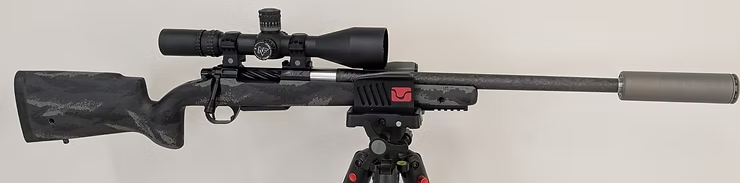
This allows hunters to build compact suppressed rifles without sacrificing ballistic performance. An 18-inch suppressed 6.5 PRC can match the velocity of a 24-inch 6.5 Creedmoor while remaining much more maneuverable in the field.
Suppressor weight matters. Heavy suppressors on thin barrels can cause point-of-impact shifts and vertical stringing. Lightweight titanium suppressors (SilencerCo Scythe, Silencer Central Banish Backcountry, Rugged Radiant) often produce more consistent results on hunting rifles.
Twist Rate: Start With the Bullet (Critical for PRC Cartridge Family Success)
One common mistake shooters make when building a rifle in the PRC cartridge family is selecting a twist rate before choosing a bullet.
At Redleg Company, we design rifles the opposite way: We start with the bullet first.
Once the bullet is selected, we determine the twist rate necessary to stabilize that projectile. Longer bullets require faster twist rates, and choosing the correct twist ensures the rifle system performs as intended.
Typical twist rates for PRC cartridges:
6.5 PRC: 1:7.5 or 1:8 (for 140-147gr bullets)
7 PRC: 1:8 or 1:8.5 (for 175-195gr bullets)
300 PRC: 1:8 or 1:8.5 (for 208-230gr bullets)
Choosing the wrong twist rate can result in poor accuracy, unstable flight, and terminal performance issues in the field.
Reloading the PRC Cartridge Family
Handloading allows shooters to maximize the performance of PRC rifles. All three cartridges respond well to structured load development.

Common brass manufacturers:
Alpha: Strong case construction, tolerates higher pressures
Peterson: Excellent consistency, widely available
Lapua: Premium quality (300 PRC only as of 2026)
Hornady: Widely available, good for initial load development
![Four brass bullet casings, stamped with "300 PRC LAPUA," are aligned on a neutral background, showcasing a metallic sheen.]
Hornady Brass (left) vs Lapua Brass (right)
Typical powder choices for the PRC cartridge family:
Cartridge | Powder Options |
6.5 PRC | H1000, RL26, N565 |
7 PRC | H1000, RL26, N570 |
300 PRC | H1000, Retumbo, RL25 |
PRC cartridges typically perform best with slow-burning magnum powders. Load development should always be conducted carefully while monitoring pressure signs.

For structured load development guidance:

Terminal Ballistics and Bullet Selection for the PRC Cartridge Family
Ballistic coefficient matters, but terminal performance matters just as much for hunters.
Thin-jacketed long-range bullets may fragment excessively when hitting heavy bone at close range. Many hunters using the PRC cartridge family prefer:
Bonded bullets:
Nosler AccuBond/Partition
Federal Terminal Ascent
Swift Scirocco
Copper bullets:
Barnes LRX
Hammer Hunter
Hornady CX
Copper bullets provide excellent penetration but typically require about 2,000 fps impact velocity for reliable expansion. Understanding velocity loss with distance is therefore critical when selecting hunting bullets for PRC cartridges.


Common Mistakes When Building PRC Cartridge Family Rifles
At Redleg, we see the same mistakes repeatedly:
1. Choosing twist rate before selecting a bullet
This is backwards. Start with the bullet, then determine the twist rate needed to stabilize it.
2. Building rifles too light for magnum recoil
A 6.5-pound 300 PRC is unpleasant to shoot. Heavier rifle systems (9-11 lbs finished weight) manage recoil far better.
3. Using heavy suppressors on thin barrels
Heavy suppressors can cause point-of-impact shifts and vertical stringing. Lightweight titanium suppressors work better on hunting-contour barrels.
4. Selecting bullets based only on BC
High-BC match bullets may fragment on heavy bone. Bonded or copper bullets provide more reliable terminal performance on elk-sized game.
5. Ignoring copper bullet expansion velocity
Copper bullets need about 2,000 fps impact velocity to expand. If your shot is 500+ yards, verify the bullet will still expand at that distance.
6. Expecting magnum performance from extremely short barrels
A 16-inch 300 PRC loses significant velocity. If you need a compact rifle, consider 6.5 PRC with an 18-inch barrel instead.
Understanding how these systems interact is critical when diagnosing accuracy problems. Our guide on building a custom rifle explains how you should think about a build and what questions you should ask.

Midwest Hunting Context: PRC Cartridge Family Performance
For Midwest hunters (Southwest Minnesota, Iowa, Nebraska, the Dakotas) who primarily hunt whitetail deer but want a rifle capable of Western elk hunts:
Typical hunting conditions:
Shot distances: 200-400 yards (Midwest open country)
Wind: 10-20 mph common
Game: Whitetail deer (200-250 lbs field dressed)
Recommendation:
6.5 PRC is more than adequate for Midwest whitetails and provides crossover capability for mule deer or antelope on Western hunts. The 7 PRC is overkill for whitetails but makes sense if you plan regular elk hunts.
For dedicated Western elk hunters:
7 PRC is the sweet spot. It provides enough energy for elk with manageable recoil for mountain hunting where you may need to make fast follow-up shots at steep angles.
What Happens If You Pick the Wrong PRC Cartridge
Nothing catastrophic. All three cartridges in the PRC cartridge family are effective on their intended game.
But here's what we see:
Hunters who pick 6.5 PRC and regret it:
Underestimated recoil reduction benefits when hunting elk (wished they'd gone 7 PRC for more margin on large game)
Wanted to shoot heavy-for-caliber bullets for deep penetration on elk (6.5 PRC tops out around 147gr)
Hunters who pick 7 PRC and regret it:
Built a dedicated deer rifle and wish they'd gone 6.5 PRC for lighter recoil and flatter trajectory
Wanted an ultra-lightweight mountain rifle under 7 lbs (7 PRC recoil is punishing in very light rifles)
Hunters who pick 300 PRC and regret it:
Underestimated recoil (wish they'd started with 7 PRC)
Wanted a lightweight rifle (300 PRC works best in 9-11 lb systems)
Found barrel life too short for high-volume practice (1,000-1,500 rounds typical)
None of these are failures, just mismatched expectations. Choosing the right cartridge from the PRC cartridge family starts with honest assessment of how you actually hunt.
Real Rifle Builds From the Shop: PRC Cartridge Family in Action
Over the years, Redleg Company has built rifles in each PRC cartridge for a wide range of applications.
Typical configurations:
6.5 PRC:
Lightweight mountain rifles (7-8 lbs)
Suppressed hunting setups (18-20 inch barrels)
Copper hunting bullets (Barnes LRX, Hornady CX)

7 PRC:
Medium-weight rifles (8-9 lbs)
Optimized for elk and mule deer
22-24 inch barrels

300 PRC:
Heavier magnum rifles (9-11 lbs)
Optimized for large game such as elk and moose
24-26 inch barrels

Each rifle is designed around the intended hunting application, not just the cartridge.
Which PRC Cartridge Should You Choose?
Choosing the right cartridge from the PRC cartridge family depends on the type of hunting you plan to do and the rifle platform you prefer.
Choose 6.5 PRC if:
You want a lightweight mountain rifle (under 8 lbs)
Recoil sensitivity is a factor
Most hunting is deer or antelope
You want a suppressed rifle with a short barrel (18-20 inches)
You prioritize flat trajectory and high-volume practice
Choose 7 PRC if:
Elk and mule deer are primary targets
You want excellent ballistic performance with moderate recoil
You prefer a versatile Western hunting cartridge
You want modern performance without 300 magnum recoil
Choose 300 PRC if:
Maximum terminal energy is required
You regularly hunt elk or moose
You want optimal performance with very heavy bullets (215-230gr)
You're willing to manage magnum recoil in a heavier rifle system
Frequently Asked Questions: PRC Cartridge Family
What does PRC stand for?
PRC stands for Precision Rifle Cartridge. The PRC cartridge family was designed to maximize the performance of modern long, high-ballistic-coefficient bullets used in precision rifles and long-range hunting. Unlike legacy magnums developed decades ago, PRC cartridges were engineered from the ground up around modern bullet geometry, long freebore, and efficient powder column design.
What cartridges are part of the PRC family?
The primary cartridges in the PRC cartridge family are 6.5 PRC, 7 PRC, and 300 PRC. Each cartridge is designed for a slightly different hunting role, ranging from deer-sized game (6.5 PRC) to large North American game such as elk and moose (300 PRC). The 7 PRC sits in the middle as an all-around Western big game cartridge. All three share the same efficient case design philosophy optimized for modern long-range bullets.
What is the difference between 6.5 PRC, 7 PRC, and 300 PRC?
The main differences between cartridges in the PRC cartridge family are bullet diameter, bullet weight, recoil, and intended game. The 6.5 PRC uses 140-147 grain bullets and is ideal for deer and antelope with minimal recoil. The 7 PRC uses 175-195 grain bullets and provides a balance between energy and recoil for elk and mule deer. The 300 PRC uses 208-230 grain bullets and delivers maximum terminal energy for elk, moose, and heavy game, but produces significant recoil. Barrel life also varies, with 6.5 PRC lasting the longest and 300 PRC wearing barrels fastest.
Are PRC cartridges good for suppressed rifles?
Yes, the PRC cartridge family performs very well in suppressed hunting rifles, particularly when paired with slightly shorter barrels. For example, an 18-inch suppressed 6.5 PRC can produce velocity similar to a traditional 24-inch 6.5 Creedmoor while remaining much more compact for hunting. Suppressor weight matters, lightweight titanium suppressors are often preferred because heavy suppressors on thin barrels can cause point-of-impact shifts and inconsistent harmonics. PRC cartridges were designed for modern rifle systems, and suppressed hunting rifles are a natural fit.
Is the 7 PRC replacing the 7mm Remington Magnum?
The 7 PRC is not replacing the 7mm Remington Magnum, but it was designed to improve performance with modern long-range bullets. The 7 PRC uses faster twist rates (1:8), longer bullets (175-195 grains), and more efficient case geometry than the 7mm Rem Mag. However, the 7mm Remington Magnum remains extremely popular, widely available, and highly effective for hunting. Both cartridges are excellent choices, the 7 PRC simply offers advantages when running very long, high-BC bullets without custom chamber work.
What is the best PRC cartridge for hunting?
The best cartridge from the PRC cartridge family depends on the type of game being hunted and your tolerance for recoil. For deer and antelope, the 6.5 PRC provides excellent performance with minimal recoil. For elk and larger deer species, the 7 PRC offers the best balance of energy and shootability. For elk, moose, and heavy North American game where maximum energy is required, the 300 PRC is the top choice. Bullet selection and shot placement matter more than cartridge choice, so choose the cartridge you can shoot most accurately under field conditions.
Do PRC cartridges require handloading?
No, factory ammunition is widely available for all three cartridges in the PRC cartridge family. Hornady, Federal, Nosler, and other manufacturers produce high-quality hunting ammunition for 6.5 PRC, 7 PRC, and 300 PRC. However, handloading allows shooters to maximize performance, tune accuracy, select optimal bullets for hunting or long-range shooting, and customize loads for specific barrel lengths and hunting conditions. Many precision shooters develop custom loads using slow-burning powders and high-quality brass to extract the full potential of PRC cartridges.
What barrel length is best for PRC cartridges?
Optimal barrel length depends on which cartridge in the PRC cartridge family you're building and whether you're using a suppressor. For 6.5 PRC, 18-24 inches works well, with 18-20 inch barrels ideal for suppressed hunting rifles. For 7 PRC, 22-24 inches balances velocity and maneuverability. For 300 PRC, 24-26 inches is typical because the larger case capacity benefits from longer barrels. Shorter barrels lose approximately 25-30 fps per inch, so an 18-inch 6.5 PRC will be about 150 fps slower than a 24-inch barrel. Suppressed rifles can run shorter barrels without compromising field performance.
What to Read Next
Now that you understand how to choose the right cartridge from the PRC cartridge family, the next question is how to build the rifle correctly. Most hunters assume the cartridge is the biggest factor in accuracy and terminal performance. It's not. Chamber geometry, bedding, twist rate, suppressor configuration, and load development all matter more than whether you picked 6.5 PRC, 7 PRC, or 300 PRC. A poorly built 7 PRC won't outperform a properly built 6.5 PRC, and no cartridge in the PRC cartridge family will perform correctly if the rifle system isn't stable. Here's what actually separates rifles that shoot from rifles that perform: What Actually Makes a Rifle Accurate? A Complete System Breakdown

Authority Close
You came into this post thinking the PRC cartridge family comparison was about picking the "best" cartridge. You're leaving it knowing it's about matching the cartridge to how you actually hunt.
If you hunt deer and antelope in lightweight suppressed rifles, the 6.5 PRC is hard to beat. If you need versatile Western performance for elk and mule deer without 300 magnum recoil, the 7 PRC is the sweet spot. If you want maximum terminal energy for large, tough game and you're willing to manage recoil, the 300 PRC delivers.
But here's what we see in the shop every spring: hunters who picked the right cartridge for the wrong rifle. A 300 PRC in a 7-pound rifle is unpleasant to shoot. A 6.5 PRC with the wrong twist rate won't stabilize heavy bullets. A 7 PRC with a heavy suppressor on a thin barrel produces vertical stringing.
The cartridge is one decision. The rifle system is what actually matters.
Spring is the right time to start this conversation. By the time elk season arrives in September, your rifle should already be dialed in, and you should already have 200 rounds of load development behind you. Redleg builds PRC rifles year-round, but shop availability is best now (April-July). By August, we're booked solid with hunters prepping for fall.
If you're serious about building this the right way, not guessing, reach out.
507-677-6007
Download the Redleg Reloading Data Sheets
Serious shooters track their load development. The Redleg Reloading Data Sheets help record powder charge ladders, seating depth testing, velocity spreads, group sizes, and rifle configuration. Consistent documentation helps shooters identify accurate load nodes and reproduce successful ammunition.
Download the Free Redleg Reloading Sheet:https://www.redlegguns.com/product-page/reloading-data-sheets

Related Reading

A 300 PRC from our own bench: 300 PRC the Owners Rifle.
Last updated: April 2026 | Data based on rifles built and tested by Redleg Company, Chandler, MN.


Comments