
How Humidity Affects Powder: The Hidden Variable in Consistency

Updated: 1 day ago
You’ve perfected your load. Every charge is meticulously weighed, and every primer is seated to spec. Your rifle holds sub-MOA groups like clockwork until one humid August morning when your chronograph says otherwise.
Sound familiar?
That’s not bad luck. That’s humidity, quietly shifting your powder’s burn rate, pressure curve, and ultimately, your rifle’s point of impact.
Most reloaders focus on temperature, but humidity, the water vapor in the air, plays just as critical a role in achieving precision. If you’re chasing elite-level accuracy, understanding how moisture interacts with your powder isn’t optional; it’s essential.
Why Temperature Gets All the Attention
Temperature is easy to measure and easier to blame. Warmer air speeds up chemical reactions, raising burn rate, chamber pressure, and velocity. Cold does the opposite. That’s why we see “temperature-stable” powders like Hodgdon Extreme or Alliant Temp-Insensitive marketed heavily.
But humidity? You won’t find it on any label, yet it can quietly alter your velocity, SD, and ES without leaving a trace.
How Powder Reacts to Moisture
Modern smokeless powders, whether single-base (nitrocellulose) or double-base (nitrocellulose + nitroglycerin), are hygroscopic, meaning they naturally absorb or release moisture depending on surrounding humidity.
Inside Each Powder Kernel
Every granule contains:
Nitrocellulose: the core propellant
Stabilizers (like diphenylamine): prevent decomposition
Deterrent coatings: regulate burn speed
Graphite or flash inhibitors: control static and flash signature
These coatings resist, but don’t block, moisture. Under high humidity, microscopic amounts of water vapor diffuse into the powder structure.
This results in:
Slightly heavier powder granules (added moisture weight)
Lower energy output (water absorbs heat)
Softer, slower pressure curves
In 70 to 90% humidity, this can cause 20 to 50 fps velocity loss and inconsistent ignition.
Symptoms of Moisture-Affected Powder
Watch for these signs during load testing:
✅ Slight clumping during dispensing or metering
✅ SDs jumping from single digits to 20+
✅ Softer or delayed ignition
✅ Unexplained vertical stringing
✅ Milder recoil or “flat” sound
If your components are consistent but your groups aren’t, humidity’s likely at work.
The Redleg Humidity Test
At Redleg Guns in Chandler, MN, we tested this theory. Using a 6.5 Creedmoor load (140-gr Berger Hybrid, 41.8 gr H4350, Fed 210M, Hornady brass), we split powder into two storage environments:
45% RH (controlled cabinet)
75 to 80% RH (open bench, 30 days in July)
Then, both were loaded and fired at 78°F.
Condition | Avg Velocity | SD | Observations |
35% RH (Controlled) | 2798 fps | 7 | Clean ignition, consistent feel |
80% RH (Exposed) | 2769 fps | 18 | Softer ignition, heavier neck soot |
That’s a 29 fps drop and 150% SD increase from humidity alone. At 1,000 yards, that translates to vertical drift measured in inches.
How Different Powders Handle Humidity
Not all powders react equally.
How Humidity Affects Different Powder Types
Not all powders react to moisture in the same way; their chemistry and coating technology make a big difference. Military research and modern powder testing show clear patterns in how each type responds to humidity:
1. Single-Base Extruded Powders (IMR, older Hodgdon lines)
Most sensitive to humidity.
Can gain nearly 1% moisture at 80% RH, leading to 25 to 40 fps velocity drop and softer pressure curves.
Examples: IMR 4064, IMR 4350, H4895.
2. Temperature-Stable Extruded Powders (Hodgdon Extreme Series)
Engineered coatings reduce both heat and humidity sensitivity.
Only 0.2 to 0.4% moisture gain, minimal effect (under 25 fps).
Examples: Varget, H4350, H4831SC.
3. Double-Base Extruded Powders (Alliant Reloder Line)
Contain nitroglycerin, which naturally resists moisture absorption.
Velocity change about 15 to 30 fps under high humidity.
Examples: Reloder 16, RL23, RL26.
4. Spherical / Ball Powders (Accurate, Winchester, Power Pro)
Densely coated and least reactive to humidity.
Typically show only 10 to 20 fps variation even after long exposure.
Examples: Power Pro 2000-MR, Winchester 760, Accurate 2520.
5. Flake Powders (Unique, Blue Dot, etc.)
Broad surface area makes them highly humidity-sensitive.
Can lose 20 to 35 fps and show erratic ignition in damp air.
🔹 Quick takeaway: Single-base extruded powders feel humidity the most. Modern coated or double-base powders handle it best. If you’re reloading in Minnesota’s humid summer air, powders like Varget, H4350, or RL26 are your best bet for consistent velocities.
Redleg’s Humidity Control Blueprint
You can’t control the weather, but you can control your workspace.
Keep powder in factory containers. They’re moisture-rated for long-term storage.
Maintain 40 to 50% RH in your reloading room with a dehumidifier or mini split.
Never leave powder in your measure overnight. Even 12 hours can shift burn rates.
Use silica desiccants in powder cabinets, ammo cans, and press drawers.
Dry your brass completely after wet tumbling; residual moisture migrates into powder during seating.
Sealing Your Loads: Protecting Against Humidity
Even with perfect storage, ammo faces humidity once it leaves the bench. For hunters, match shooters, and those storing rounds long-term, sealing primers and bullets adds a powerful extra layer of protection.
The Chemistry Behind It
Loctite 290 wicking is a low-viscosity anaerobic sealant, meaning it only cures where air is absent and metal contact exists, exactly what you have between brass and primer, or brass and bullet. It does not harden in open air, so excess residue wipes off easily. Once it wicks into that microscopic gap, it forms a tough polymer barrier that locks out water, oil, and humidity without “gluing” components together permanently.
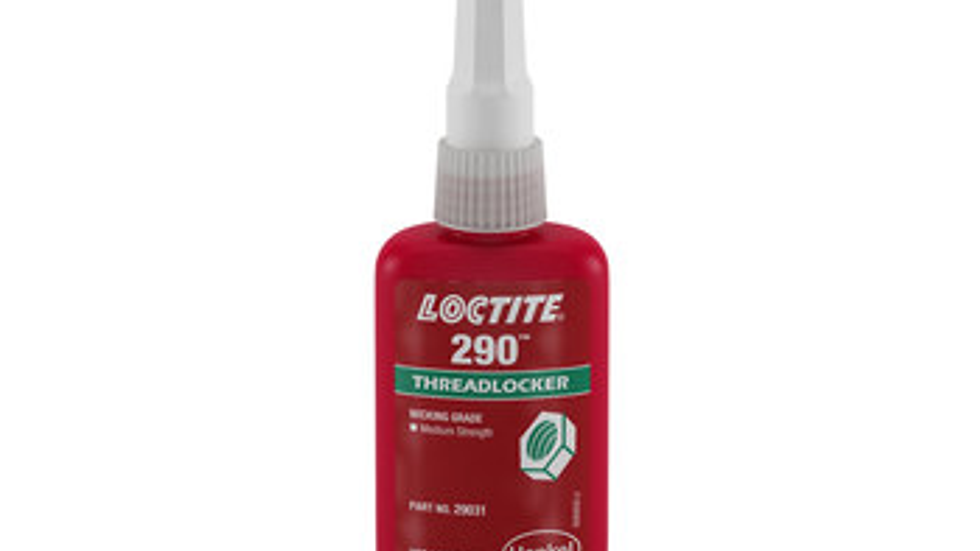
How to Apply Loctite 290 Wicking to Primers and Bullets
Step 1: Primer Sealing
Seat your primers normally.
Place a small drop of Loctite 290 on a fine-tipped brush or a toothpick.
Touch it to the edge where the primer cup meets the case; it will wick in instantly.
Rotate the case once or twice to distribute evenly.
Let it dry for 15 to 20 minutes before handling.
✅ Capillary action does the work; you don’t need to flood the pocket.

Step 2: Bullet (Case Mouth) Sealing
After seating the bullet, apply one small drop of Loctite 290 at the case mouth.
Rotate the cartridge slowly so the sealant creates a thin, even ring around the bullet base.
Wipe away excess immediately with a paper towel or Q-tip.
Let it dry for at least 1 hour before boxing.
⚠️ Do not allow sealant to drip into the case mouth; you just want a surface ring where the bullet meets the brass.

Water & Humidity Performance
Once cured, Loctite 290 creates a watertight, vapor-proof seal. We’ve submerged sealed test rounds for 48 hours with zero change in ignition or velocity, even after being stored for a full year in Minnesota’s summer humidity.
Important Notes
Don’t use Loctite 242/243 (blue) or Loctite 271 (red); they’re threadlockers, not sealants.
Loctite SF 7649 is a primer activator for adhesives, not for ammunition.
A tiny amount goes a long way; capillary action will pull the product into the exact area needed.
Redleg Field-Proof Setup (One Product, One Process)
Component | Product | Application | Dry Time |
Primer Seal | Loctite 290 | Small ring at primer edge | 20 min |
Bullet Seal | Loctite 290 | Thin ring at case mouth | 1 hr |
Storage | Airtight + Silica Gel | , | , |
Result: 100% moisture-sealed, long-term stable ammunition perfect for Minnesota’s humid summers, snowy hunts, or long-term safe storage.
The Humidity Chain Reaction
When powder moisture changes, your ballistic chain does too:
Powder absorbs moisture → burns slower → lowers pressure → shifts barrel harmonics → changes point of impact.
Even minor moisture differences between rounds create vertical stringing at long range. That’s why Redleg’s philosophy is simple: Precision starts at the bench, not the range.
Humidity at the Range
Once your powder’s sealed in a case, external humidity doesn’t change its burn. But it does affect:
Air density and drag (humid air is slightly less dense).
Barrel cooling rate (moist air transfers heat differently).
Chronograph accuracy (water vapor can interfere with optical sensors).
Redleg Pro Tips
✅ Test loads quarterly across Minnesota’s seasons.
✅ Label powder with open date and storage details.
✅ Avoid mixing different lots.
✅ Use oldest powder first.
✅ Store primers airtight; they’re even more humidity-sensitive than powder.
Backed by Ballistic Science
The U.S. Army Ballistic Research Lab found:
A 1% rise in powder moisture = 12 to 15% chamber pressure drop,
30 fps velocity loss, and
Major ignition inconsistency.
That’s not myth; that’s chemistry.
The Final Takeaway: Humidity Quietly Undermines Precision
Humidity won’t blow primers or ruin brass overnight, but it’s a silent thief of consistency. For Minnesota’s hunters, reloaders, and long-range shooters, it’s a variable you can’t afford to ignore. That small swing in moisture can mean the difference between a perfect group and a puzzling flyer.
So take control where others guess. Build your loads in a stable environment. Seal your ammo like a professional. And treat every round as a precision instrument, not a disposable cartridge.
Because at Redleg Guns, accuracy isn’t luck; it’s craftsmanship. Every rifle we build, every class we teach, and every article we share is designed to help you master the details that others overlook.
Go Deeper with Redleg
Want to track your loads like a true craftsman?
📘 Download the Redleg Reloading Data Sheets built to record and organize your reloading information.

Ready to learn what really happens when the trigger breaks?
🔍 Check out our Primer Deep Dive: The Most Overlooked Component in Reloading; it’s the perfect next step in mastering reliability from the inside out.
Then explore our full Precision Environment Series:
How Temperature Affects Powder »
How Humidity Impacts Powder »
Altitude, Air Density, and Your Ballistics »


Comments